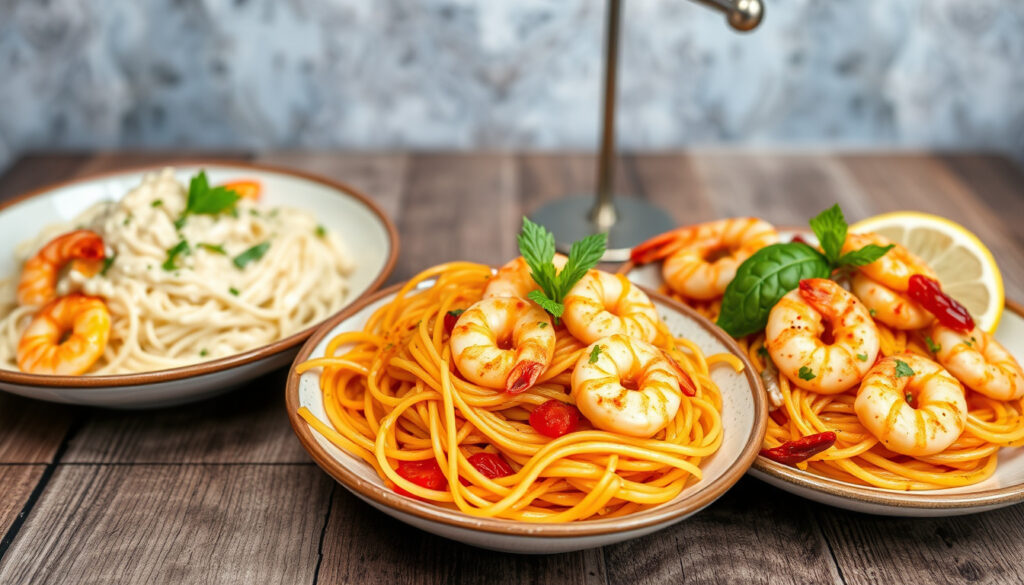
Prawn Pasta Recipe: Best Creamy, Tomato & Spicy Versions
Few pasta dishes hit the table faster or taste more impressive than a well-made prawn version. Whether you crave cream sauce richness or tomato brightness, mastering one or two techniques means you can pull together a restaurant-worthy dinner in under 20 minutes.
Average Prep Time: 10-20 minutes · Cook Time: 10-15 minutes · Servings: 4 · Key Ingredients: Prawns, pasta, garlic, tomatoes
Quick snapshot
- Jamie Oliver’s prawn linguine uses saffron, anchovies, and tinned tomatoes as core flavor components (Jamie Oliver (celebrity chef, published recipe developer))
- His shrimp tagliatelle recipe combines sweet tomato with cream and takes 30 minutes total (Jamie Oliver (celebrity chef, published recipe developer))
- The Sicilian variation brings saffron and cinnamon for an aromatic twist (BBC Good Food (established UK food publication))
- Optimal pasta-to-sauce ratio varies across recipes with no consensus
- Dairy-free cream alternatives lack rigorous side-by-side testing
- Seafood pasta searches peak in summer months but remain consistently popular year-round
- The without-cream trend continues to gain traction as dairy-free cooking grows
The difference between a forgettable prawn pasta and a memorable one often comes down to one thing: not overcooking the prawns. A minute too long and they turn rubbery, stealing the show from everything else on the plate.
Key specifications for prawn pasta at a glance, from pasta types to protein ratios.
| Attribute | Detail |
|---|---|
| Top Variations | Creamy garlic, tomato, spicy |
| Common Prep | 10-20 minutes |
| Pasta Types | Linguine, spaghetti, penne |
| Protein Ratio | 100–150g prawns per person |
| Sauce Base | Garlic, white wine, butter or cream |
| Finish Touch | Fresh parsley, lemon zest, chili flakes |
Best Prawn Pasta Recipe
The best prawn pasta recipes share a common philosophy: let the prawns lead and build the sauce around them. Top-rated versions from RecipeTin Eats and Jamie Oliver both prioritize a garlicky, slightly buttery foundation that enhances the natural sweetness of the prawns without overwhelming them.
“The sauce should coat each strand without feeling gloppy—silky, not stodgy. Less cream than you expect, built depth through wine and garlic.”
— RecipeTin Eats (high-traffic recipe publication)
Ingredients for classic version
- 400g linguine or spaghetti
- 500g raw king prawns, peeled and deveined
- 4 cloves garlic, thinly sliced
- 100ml dry white wine
- 50g unsalted butter
- 2 tablespoons olive oil
- Large handful flat-leaf parsley
- Zest of one lemon
- Red chili flakes to taste
- Sea salt and black pepper
Step-by-step cooking guide
Start by bringing a large pot of generously salted water to a rolling boil—this is your moment to season the pasta from the inside out. Cook your pasta according to package directions, but pull it a full minute before the al dente mark since it will finish cooking in the sauce.
While the pasta cooks, heat olive oil in a wide-based skillet over medium-high heat. Add the garlic and chili flakes, stirring constantly for about 30 seconds until fragrant but not browned. Pour in the white wine and let it bubble vigorously for a minute, scraping up any caramelized bits from the pan’s bottom.
“Shell them as you eat or leave them intact for presentation. Either way, press them into the sauce and let the heat work.”
— Jamie Oliver (celebrity chef, published recipe developer)
Drop the prawns into the pan in a single layer. Cook undisturbed for 90 seconds, then flip each prawn. After another 60 seconds, the prawns should be pink throughout and starting to curl. Remove them immediately and set aside—this is not the moment to walk away.
Reduce the heat to medium-low and whisk the butter into the wine sauce until emulsified. Drain the pasta and add it directly to the pan, tossing vigorously to coat every strand. Return the prawns on top, add the parsley and lemon zest, and toss once more before serving.
The implication: timing everything precisely—pasta pulled early, prawns added last—transforms a simple weeknight meal into something that rivals restaurant quality.
Tomato Prawn Pasta Recipe
Tomato-based prawn pasta offers a brighter, more acidic counterpart to the cream versions. Jamie Oliver’s approach in his shrimp tagliatelle demonstrates how a simple sweet tomato sauce can carry seafood without competing for attention (Jamie Oliver (celebrity chef, published recipe developer)). His recipe uses 8 plum tomatoes, 300g peeled prawns, and 142ml single cream to create a balanced, deeply satisfying dish that serves four people in 30 minutes.
Fresh tomato base
- 400g fresh plum tomatoes, roughly chopped
- 1 medium onion, finely diced
- 2 garlic cloves, minced
- 2 tablespoons olive oil
- 1 teaspoon sugar (to balance acidity)
- Fresh basil leaves
- Salt and pepper to season
The technique involves softening the onion in olive oil until translucent—about five minutes over medium heat—then adding garlic for another 30 seconds. Add the tomatoes and sugar, season well, and let everything simmer uncovered for 15 minutes until the sauce thickens naturally. Blitz half of it with an immersion blender for body while keeping some texture intact.
Creamy tomato variation
For a richer result, stir 50ml of single cream into the finished tomato sauce just before adding the cooked pasta. The cream mellows the acidity without creating a heavy béchamel-style coating. A scattering of crumbled feta or ricotta on top, as Jamie Oliver suggests, adds tang and saltiness that amplify the overall depth (Jamie Oliver (celebrity chef, published recipe developer)).
Tomato and prawn is a classic pairing because the acidity of the sauce cuts through the richness of the shellfish, preventing that heavy feeling you sometimes get from cream-only versions. Think of it as a natural palate cleanser built into the dish.
What this means: the tomato sauce section shows how acidity and sweetness balance, teaching home cooks to read their ingredients and adjust seasoning mid-cook.
Creamy Prawn Pasta Recipe
Creamy prawn pasta sits at the indulgent end of the spectrum, and for good reason. A well-made cream sauce should coat each strand of pasta without feeling gloppy—silky, not stodgy. RecipeTin Eats and other highly-rated recipe sites achieve this by using less cream than you might expect and building flavor through garlic, white wine, and a touch of mustard (RecipeTin Eats (high-traffic recipe publication)).
Garlic-infused cream sauce
- 1 cup heavy cream (240ml)
- 4–5 garlic cloves, minced
- 2 tablespoons butter
- 1 teaspoon Dijon mustard
- ½ cup Parmesan, finely grated
- ½ cup dry white wine
- Fresh thyme leaves (optional)
Melt butter in a wide skillet over medium heat. Add garlic and cook gently for two minutes—never let it brown or it turns bitter. Pour in the white wine and let it reduce by half, about three minutes. Add the cream and mustard, stirring to combine, and let it simmer for five minutes until it coats the back of a spoon.
Remove the pan from heat and stir in the Parmesan in two batches, allowing each addition to melt fully before adding more. This tempering step prevents the sauce from breaking. Return the drained pasta to the pan, toss to coat, then fold in the cooked prawns at the last moment to avoid overcooking.
Sun-dried tomato cream
Adding sun-dried tomatoes transforms the classic cream sauce into something with more complexity. Roughly chop 6–8 pieces and stir them into the sauce after the wine reduction, letting them warm through before adding the cream. The concentrated sweetness and slight chewiness provide textural contrast that plain creamy versions lack.
The pattern: restraint in cream quantity and patience with the Parmesan tempering step separate silky sauces from broken, gloppy ones.
Best Prawn Pasta Recipe Without Cream
Going without cream opens up different flavor territories entirely. The without-cream movement, well-represented on BBC Good Food and in Jamie Oliver’s own repertoire, shows that you can achieve richness through techniques like emulsification with butter, wine reduction, or a touch of dairy-free alternatives (BBC Good Food (established UK food publication)).
Lemon chilli linguine
- 400g linguine
- 400g raw prawns
- 3 garlic cloves, sliced
- 1 red chilli, finely sliced
- Zest and juice of 2 lemons
- 100ml dry white wine
- 50g cold butter, cubed
- Large handful rocket or watercress
- Sea salt and cracked black pepper
Cook the pasta, reserving a cup of starchy cooking water. In a large pan, soften the garlic and chilli in olive oil for a minute, then add the wine and let it bubble down by half. Add the lemon juice and zest, then remove the pan from heat. Toss in the cold butter cubes and swirl the pan until the butter melts and creates a glossy sauce—this is the emulsification working in your favor.
Add the drained pasta and toss vigorously, adding splashes of cooking water as needed to loosen the sauce and coat every piece. Fold in the rocket at the end so it wilts slightly from the residual heat. Serve immediately with extra lemon zest and chilli on top.
Spicy garlic alternative
The spicy garlic approach keeps things simple: olive oil, a generous amount of sliced garlic, chili flakes, and a splash of pasta cooking water to create a loose sauce that clings to the noodles. This technique, favored by quick weeknight cooks, relies entirely on quality ingredients rather than culinary tricks. BBC Good Food’s versions emphasize using frozen prawns successfully—the key is ensuring they’re fully thawed and thoroughly dried before hitting the hot pan.
Without cream, you lose some of the richness that coats the palate. What you gain is clarity of flavor: the prawns taste more themselves, the garlic and lemon punch through, and the overall effect feels lighter and more vibrant.
The catch: emulsification technique rewards attention—the moment you walk away, the butter can separate and the sauce falls apart.
Simple Prawn Pasta Recipes
Simplicity is not the enemy of great flavor—it’s often the secret ingredient. Jamie Oliver’s approach to quick prawn pasta recipes proves this consistently. His 15-minute prawn linguine with saffron, anchovies, and tinned tomatoes demonstrates how pantry staples can produce a dish with genuine depth (Jamie Oliver (celebrity chef, published recipe developer)). The recipe calls for 12 large raw shell-on king prawns from sustainable sources and uses a sauce that simmers for 12 minutes after the tomatoes are added.
Jamie Oliver inspiration
- 12 large raw king prawns, shell-on (sustainable sourcing recommended)
- 400g spaghetti or linguine
- 1 can (400g) tinned tomatoes
- 2 anchovy fillets, finely chopped
- 1 small pinch saffron strands
- 4 garlic cloves, sliced
- 1 red chilli, sliced
- Olive oil
- Sea salt
Soak the saffron in two tablespoons of warm water for five minutes to release its color and flavor. In a wide pan, soften the garlic and anchovies in olive oil—the anchovies will melt into the oil, creating a savory foundation. Add the chilli, then pour in the tinned tomatoes and saffron water. Simmer for 12 minutes until the sauce thickens.
Cook the pasta until al dente, reserving some cooking water. Add the pasta to the sauce and toss well, adding splashes of cooking water as needed. Now add the prawns to the pan, pressing them into the sauce, and cook for three minutes until they turn pink. Shell them as you eat or leave them intact for presentation.
Sicilian variation
The Sicilian adaptation takes the basic template and adds aromatic spices that signal a broader culinary tradition. Saffron and cinnamon appear in recipes documented by food bloggers who have recreated Jamie Oliver’s Sicilian prawn pasta (Fait Maison Blog (food blog documenting recipe adaptations)). The spice combination—unusual in most Western pasta preparations—creates something that bridges cultures and feels both familiar and exotic. The recipe typically uses 300g prawns, 400g canned tomatoes, and 3 anchovy fillets as its foundation.
The implication: simple recipes work because they leverage pantry staples with strong flavor profiles, letting ingredients do the heavy lifting.
How to make prawn pasta
Making prawn pasta at home follows a predictable rhythm across all variations: prepare the components, build the sauce, combine with pasta, and finish with the prawns. The steps below apply broadly, but adjust timing based on whether you’re working with fresh or frozen prawns and whether the sauce is tomato-based, cream, or butter-emulsion.
- Prep the prawns: Thaw completely if frozen. Pat dry with paper towels—this prevents steaming instead of searing. Season lightly with salt.
- Boil the pasta: Use a large pot of generously salted water. Cook to al dente minus one minute. Reserve at least one cup of pasta cooking water before draining.
- Build the sauce: Depending on your chosen variation, this might involve sweating aromatics, deglazing with wine, simmering tomatoes, or creating a butter emulsion. Taste and adjust seasoning before combining.
- Marry pasta and sauce: Add drained pasta directly to the sauce. Toss vigorously over medium heat for 60–90 seconds, adding pasta water as needed to create a cohesive, glossy coating.
- Add the prawns: For most recipes, this is the final step. Fold in the cooked prawns, heat through for 60–90 seconds, then serve immediately. Garnish with fresh herbs, lemon zest, and a crack of black pepper.
The most common mistake home cooks make is overcooking the prawns. They go from tender to rubbery in under two minutes, so add them at the very end and watch them closely. Better slightly underdone than chewy.
Related reading: Jamie Oliver’s prawn linguine · Jamie Oliver’s shrimp tagliatelle
Frequently asked questions
What ingredients do I need for prawn pasta?
Core ingredients include pasta (linguine, spaghetti, or penne work best), raw king prawns (fresh or frozen), garlic, olive oil or butter, and a flavor base (white wine, tomatoes, or cream). Seasonings typically include lemon, chilli, and fresh herbs like parsley or basil.
How do I cook prawns for pasta?
Cook prawns in a hot pan for 90 seconds per side until pink and just opaque throughout. For pasta, add them at the very end—just long enough to warm through—rather than cooking them in the sauce for an extended period. Overcooking is the main risk to avoid.
Can prawn pasta be made dairy-free?
Yes. Use a butter emulsion technique (cold butter whisked into a wine-lemon sauce off heat) for richness without cream. Alternatively, use coconut cream or cashew cream as dairy-free alternatives. The without-cream versions often taste brighter and more vibrant overall.
What substitutes for prawns?
Scallops, firm white fish (cod or halibut), or firm tofu work as alternatives. Adjust cooking times accordingly—fish fillets need 3–4 minutes per side, scallops about 90 seconds. Vegetarian versions can substitute with roasted chickpeas or marinated artichoke hearts for texture.
How to store leftover prawn pasta?
Store in an airtight container in the refrigerator for up to two days. The pasta will absorb the sauce and become drier—reheat in a pan with a splash of water or stock to loosen it. Do not freeze cream-based versions as the sauce will separate. Tomato-based versions freeze reasonably well for up to one month.
Is prawn pasta healthy?
Prawns are lean protein with relatively low fat content, making them a healthier choice than many meat-based pasta dishes. The health profile depends heavily on the sauce—tomato-based versions with olive oil rank highest, while cream-based versions add saturated fat. A typical serving of prawn pasta (without cream) runs approximately 450–500 calories per person.
What sides pair with prawn pasta?
Keep sides light to avoid overwhelming the delicate prawn flavor. A simple green salad with lemon dressing, steamed broccoli, or roasted asparagus work well. Crusty bread for soaking up any remaining sauce is always welcome. Avoid heavy sides like garlic bread with cheese—save that for richer meat-based pasta dishes.
Prawn pasta rewards home cooks who pay attention to small details—prawn doneness, sauce seasoning, pasta timing. Master these and the 20-minute window delivers consistently impressive results.
More related posts
 Scott Boland: Career, Personal Life, and Drinking Myth
 Vitamin C Serum Benefits, How to Use, and Expert Picks
 Queen Victoria Building – Sydney Heritage Shopping Guide
 Sony WF-1000XM5 Review: Best ANC vs Bose 2025
 Merkel Cell Carcinoma vs Melanoma: Symptoms, Spread & Survival
 1500 USD to AUD: Live Rate, Forecast & Conversion Guide
 Scotty Cam: Real Name, Salary, Wife, Kids & Net Worth
 Jane Austen: Biography, Novels, Marriage Refusal & Legacy