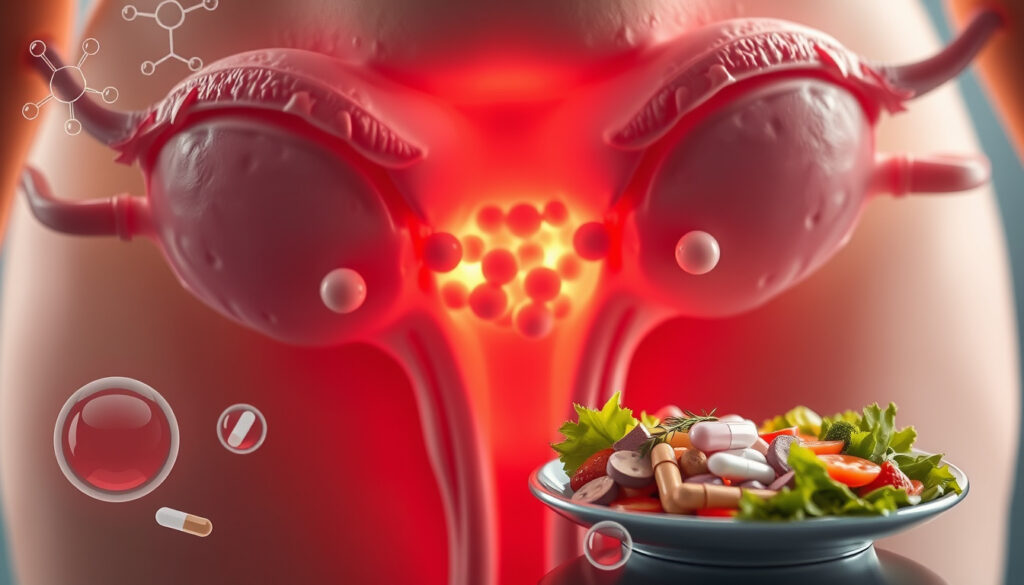
Polycystic Ovary Syndrome (PCOS): Symptoms, Causes, Treatment
If you’ve been dealing with unpredictable periods, stubborn belly weight, or unexpected hair growth, you’re not alone—and those symptoms might not be all in your head. Polycystic ovary syndrome (PCOS) is one of the most common hormone disorders affecting women of reproductive age.
Primary Impact: Ovaries, hormones, periods, fertility · Key Features: Irregular periods, high androgens, polycystic ovaries · Classification: Most common reproductive endocrinopathy · Affects: Women of reproductive age
Quick snapshot
- Irregular periods and high androgens are diagnostic features (Cleveland Clinic medical resource)
- Affects ovarian function and fertility (Johns Hopkins Medicine health guide)
- Exact genetic causes
- Precise prevalence rates without larger studies
- Often diagnosed in 20s–30s after years of symptoms
- Symptoms can fluctuate across the reproductive lifespan
- Growing research on GLP-1 medications for PCOS management
- More focus on individualized treatment approaches
Below is a quick-reference table summarizing key PCOS facts from major health authorities.
| Field | Detail |
|---|---|
| Definition | Hormonal disorder with polycystic ovaries |
| Main Symptoms | Irregular periods, high androgens |
| Prevalence Note | Common in reproductive-age women |
| Key Sources | WHO, NHS, Mayo Clinic |
What are the first signs of PCOS?
PCOS announces itself differently for different people, but three patterns show up most often. According to Cleveland Clinic medical resource (leading academic medical center), healthcare providers typically diagnose PCOS if a patient has at least two of three symptoms: irregular or missed periods, signs of excess androgens, or polycystic ovaries visible on ultrasound.
Early physical changes
- Acne or oily skin that doesn’t respond to typical treatments
- Thinning hair or male-pattern baldness
- Extra body hair on the chest, stomach, and back (hirsutism)
The excess facial and body hair that high androgen levels cause affects up to 70% of people with PCOS, according to Cleveland Clinic medical resource. This happens because the ovaries produce too many male hormones, disrupting the normal hormonal balance.
Menstrual irregularities
Irregular periods are often the first red flag. As Johns Hopkins Medicine health guide (prestigious academic medical institution) explains, PCOS symptoms include missed periods, irregular periods, or very light periods. Many women experience cycles longer than 35 days or fewer than eight periods per year.
Hormonal indicators
PCOS symptoms include ovaries that are large or have many cysts—though having polycystic ovaries alone doesn’t confirm PCOS, states Johns Hopkins Medicine health guide. Acanthosis nigricans, or darkening of the skin in folds of the neck, armpits, and groin, can also occur and may signal insulin resistance, notes Cleveland Clinic medical resource.
What causes PCOS flare-ups?
PCOS isn’t a static condition. Women with PCOS often describe cycles of stability and flare-ups rather than consistent symptoms, according to London Premier Laser & Skin Clinic hormonal health resource (specialist dermatology and hormonal treatment provider). Understanding what triggers these flares gives you more control over your symptoms.
Hormonal triggers
PCOS flare-ups often occur when hormone levels become unbalanced, influenced by stress, diet, or weight changes, reports London Premier Laser & Skin Clinic hormonal health resource. Many women with PCOS experience insulin resistance, where the body struggles to regulate blood sugar, leading to increased insulin production that stimulates androgens.
Lifestyle factors
- Lack of sleep disrupting hormonal rhythms
- Poor diet high in refined carbohydrates
- Sedentary habits contributing to weight gain
Women with PCOS often have higher levels of inflammatory markers such as C-reactive protein (CRP) and interleukin-6 (IL-6), according to MyOvaCare reproductive health guide (patient education platform specializing in reproductive health). Chronic inflammation can lead to insulin resistance and hormonal imbalances, causing weight gain, acne, irregular periods, excessive hair growth, and mood swings.
Stress and diet influences
High stress levels raise cortisol, which disrupts hormonal balance and triggers PCOS flare-ups, notes London Premier Laser & Skin Clinic hormonal health resource. Interestingly, under-eating and over-exercising can backfire—increasing stress hormones and inflammatory signaling, often worsening PCOS symptoms, reports MyOvaCare reproductive health guide.
PCOS flare-ups aren’t random—they follow predictable pathways. Insulin resistance feeds androgen production, which feeds inflammation, which worsens insulin resistance. Breaking this cycle at any point helps stabilize symptoms.
What is a PCOS belly?
Many women with PCOS notice weight collecting around their midsection—not just general weight gain, but a specific pattern of abdominal bloating and fat. This “PCOS belly” has distinct characteristics that set it apart from typical weight distribution.
Appearance and causes
PCOS symptoms include weight gain, especially around the belly, according to Johns Hopkins Medicine health guide. This visceral fat collects deep around internal organs and is closely linked to insulin resistance. The same hormonal imbalances driving your PCOS symptoms also make your body prefer storing fat in the abdominal region.
Health implications
Central weight gain from PCOS isn’t just cosmetic—it carries real health risks. Visceral fat produces inflammatory compounds and worsens insulin resistance, creating a feedback loop that perpetuates PCOS symptoms, explains MyOvaCare reproductive health guide. This explains why women with PCOS face higher long-term risks for type 2 diabetes and cardiovascular issues.
Management tips
- Prioritize strength training over cardio alone—muscle improves insulin sensitivity
- Focus on anti-inflammatory foods: fatty fish, leafy greens, nuts
- Address sleep quality—poor sleep raises cortisol and insulin resistance
- Consider working with a dietitian familiar with PCOS
Targeting PCOS belly fat through diet and exercise alone is notoriously difficult. Research from NIH/PMC peer-reviewed medical database (peer-reviewed medical research database) shows that GLP-1 medications like semaglutide can significantly reduce body weight in almost 80% of obese PCOS patients who were unresponsive to previous lifestyle interventions.
At what age is PCOS most common?
PCOS affects women during their reproductive years, but the timing of diagnosis varies significantly. Most women develop symptoms in their late teens to early twenties, but many don’t get answers until years later.
Typical onset age
PCOS is a common type of hormone imbalance that typically emerges when the ovaries ramp up production after puberty, according to Cleveland Clinic medical resource. Symptoms often become noticeable in the late teens and early twenties, particularly when irregular periods persist beyond a couple years after menarche.
Lifespan impacts
PCOS doesn’t end when reproductive years do. The hormonal and metabolic implications persist throughout life. Mayo Clinic reference (globally recognized academic medical center) notes that polycystic ovaries may be bigger with many follicles containing immature eggs developing around the edge, and the ovaries might not work as they should.
Diagnosis timing
Many women with PCOS describe cycles of stability and flare-ups, according to London Premier Laser & Skin Clinic hormonal health resource. The condition often gets diagnosed in the twenties or thirties when women seek help for fertility issues or notice persistent symptoms. Unfortunately, this means years of unexplained symptoms before diagnosis.
Does PCOS qualify you for Ozempic?
Ozempic (semaglutide) has become a hot topic in PCOS management, but the reality is more nuanced than headlines suggest. Here’s what the research actually shows—and what it doesn’t.
Eligibility criteria
Ozempic is not FDA approved to treat PCOS but may be prescribed off-label to help manage PCOS symptoms, according to GoodRx prescription guidance resource (prescription savings platform with medical editorial standards). It is FDA approved for type 2 diabetes and chronic weight management, so insurance coverage typically depends on whether you meet those criteria first.
GLP-1 benefits for PCOS
Brooke Miner, RD, a registered dietitian specializing in metabolic health, states that Ozempic may help manage PCOS by effectively lowering blood sugar and improving insulin sensitivity, supporting better metabolic control, inducing weight loss, regulating cycles, and reducing androgen-driven symptoms, reports Fay Nutrition clinical research summary.
In a small study, after 3 months of Ozempic treatment, all participants with PCOS (BMI greater than 30) had improvement in insulin resistance and nearly 80% had at least 5% body weight reduction, according to GoodRx prescription guidance resource. After 6 months of Ozempic treatment, the majority of PCOS participants saw improvement in menstrual cycle regularity.
A review of 11 clinical trials involving 469 women with PCOS found that those who took GLP-1 medications had higher natural pregnancy rates and more regular periods compared to those who didn’t, notes Claire Pettitt women’s health research analysis (women’s health clinical writer).
Medical guidance
Common side effects of Ozempic are nausea, vomiting, diarrhea, and constipation, according to Inito Blogs women’s health platform (women’s health education platform). Ozempic is not typically recommended during pregnancy due to limited clinical trials on its effect on a developing fetus, which is a critical consideration for women trying to conceive.
Semaglutide supports weight management, improves insulin sensitivity, and can ease common PCOS symptoms when paired with lifestyle changes, reports Hellowise telehealth platform resource (telehealth platform). In clinical trials of Wegovy, participants lost about 15% of body weight after 68 weeks of treatment when combined with diet and exercise.
Research found that free testosterone decreased significantly (approximately 19%) after 6 months of treatment with liraglutide (another GLP-1 agonist) in obese PCOS patients, according to Fay Nutrition clinical research summary. However, despite lowering testosterone levels, short-term GLP-1 treatments don’t significantly improve hirsutism scores after 6 months, even when weight and testosterone improved.
These findings indicate that GLP-1 medications can address metabolic and reproductive PCOS symptoms, but they require ongoing use and don’t resolve all manifestations—hirsutism in particular may persist despite other improvements.
Ozempic for PCOS is promising but not a magic bullet. It works best as part of a comprehensive approach—diet, exercise, stress management, and sometimes additional medications. And because it’s not FDA-approved for PCOS specifically, getting a prescription requires finding a provider willing to prescribe off-label or meeting criteria for approved uses like type 2 diabetes or BMI greater than 30.
Upsides
- Significant weight loss in most users (up to 15% body weight)
- Improved insulin sensitivity and hormonal balance
- More regular menstrual cycles reported in majority of users
- Higher pregnancy rates in studies of GLP-1 medications
Downsides
- Not FDA-approved for PCOS specifically
- Common GI side effects (nausea, diarrhea, constipation)
- Not recommended during pregnancy
- Requires ongoing use—weight often returns after stopping
- Doesn’t significantly improve hirsutism in short term
- Insurance may not cover for PCOS indication alone
Higher than normal androgen levels lead to irregular menstrual periods and excess hair growth.
— World Health Organization (WHO), Global health authority fact sheet
PCOS is a common condition affecting how a woman’s ovaries work. The exact cause is unknown, but it’s related to abnormal hormone levels.
— NHS (UK National Health Service), UK public healthcare system overview
Related reading: Merkel Cell Carcinoma vs Melanoma: Symptoms, Spread & Survival · Deep Vein Thrombosis Symptoms – Key Signs and When to Act
For effective PCOS management, many Australian women turn to the Jean Hailes Clinic in Melbourne, which delivers expert diagnostic and treatment services.
Frequently asked questions
What happens when you have polycystic ovary syndrome?
PCOS is a hormonal disorder where the ovaries produce abnormal amounts of male hormones (androgens). This disrupts the menstrual cycle, often causing irregular or missed periods. The hormonal imbalance can also lead to excess hair growth, acne, weight gain centered around the belly, and fertility challenges. Many women also develop insulin resistance, which worsens other symptoms and increases long-term risks for type 2 diabetes and cardiovascular disease.
What are the symptoms of PCOD in females?
PCOD symptoms in females include irregular or absent menstrual periods, extra body hair on the chest, stomach, and back (hirsutism), acne or oily skin, male-pattern baldness or thinning hair, weight gain especially around the belly, darkening of skin in folds (acanthosis nigricans), and ovaries that are enlarged or contain many small cysts. Not everyone experiences all symptoms—the presentation varies significantly from person to person.
What are the 5 signs of PCOS?
The five most recognizable signs of PCOS include: irregular or missed periods, excess androgen symptoms (hirsutism, acne), polycystic ovaries on ultrasound, weight gain centered around the abdomen, and insulin resistance evidenced by difficulty losing weight or acanthosis nigricans. A healthcare provider typically diagnoses PCOS when at least two of three criteria are present: irregular ovulation, elevated androgens, and polycystic ovaries on imaging.
How is PCOS diagnosed?
PCOS diagnosis involves ruling out other conditions first, then checking for the hallmark features. Doctors typically use the Rotterdam criteria: at least two of three—irregular or absent ovulation, clinical or biochemical signs of excess androgens, and polycystic ovaries on ultrasound. Blood tests check hormone levels and rule out thyroid or pituitary disorders. Your provider may also screen for insulin resistance and related metabolic risks.
Can PCOS affect pregnancy?
PCOS can significantly affect pregnancy by causing irregular ovulation or complete absence of ovulation, making conception more difficult. However, many women with PCOS do conceive naturally or with fertility support. Pregnancy itself carries higher risks for women with PCOS, including gestational diabetes and preeclampsia. Weight loss and hormonal regulation before conception improve outcomes. GLP-1 medications like Ozempic have shown promise in improving pregnancy rates in clinical trials.
What is polycystic ovary syndrome treatment?
PCOS treatment focuses on managing symptoms and reducing long-term health risks. Lifestyle changes form the foundation—nutrition adjustments, regular exercise, and stress management. Medications may include hormonal birth control to regulate cycles and reduce androgen symptoms, anti-androgens for hirsutism, metformin for insulin resistance, and clomiphene for fertility. Off-label GLP-1 medications like Ozempic are increasingly used for weight management and insulin sensitivity. There is no cure, but treatment significantly reduces flare-ups and complications.
For women struggling with PCOS symptoms that haven’t improved with lifestyle changes alone, the growing body of research on GLP-1 medications offers a new avenue worth discussing with your healthcare provider. The trade-off is clear: these medications require ongoing commitment, come with side effects, and aren’t right for everyone—but for those with insulin resistance-driven PCOS, the improvements in weight, cycle regularity, and fertility can be substantial.
More related posts
 Sid Vicious Death: Official Cause and Final Days
 Frozen Yoghurt Near Me: Ireland Spots, Delivery & Health
 Prawn Pasta Recipe: Best Creamy, Tomato & Spicy Versions
 Charles Dickens: Biography, Novels, and Key Facts
 Anna Nicole Smith: Her Life, Death, and Financial Legacy
 Emily Dickinson: Biography, Poems, and Taylor Swift Link
 Barry Williams Now: Career, Family, and Life Update
 OLED vs QLED – 2025 Comparison Guide