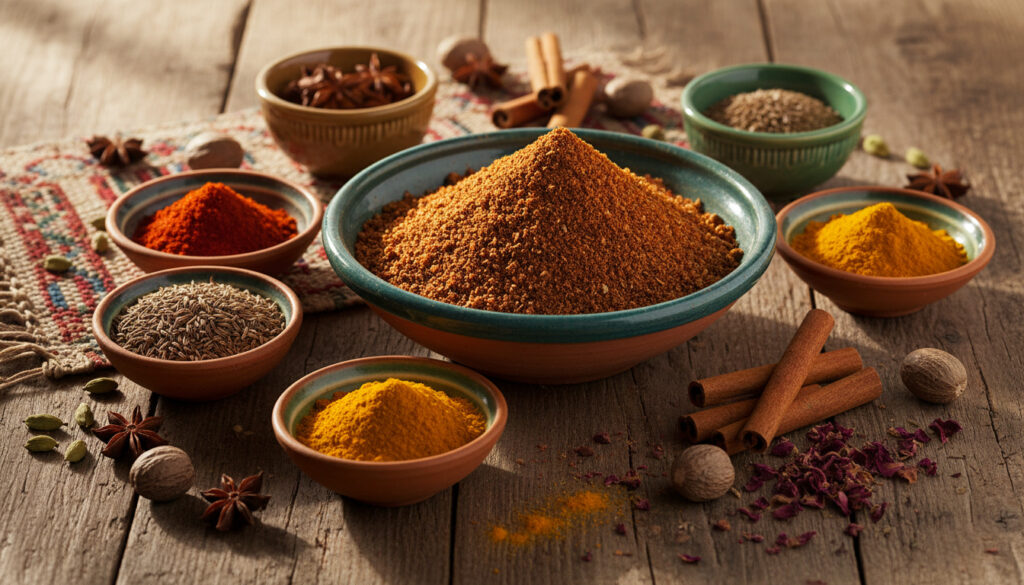
Ras el Hanout – What It Is, Ingredients and How to Use
Ras el hanout represents one of North Africa’s most complex and revered spice traditions. This Moroccan blend carries a name that translates roughly to “head of the shop,” suggesting the finest spices a merchant has to offer according to historical sources.
Unlike standardized commercial seasonings, ras el hanout varies dramatically by region, family tradition, and individual spice merchants. Some versions contain twenty to thirty distinct ingredients, while simpler formulations might include only a dozen, creating a spectrum of aromatic profiles that resist simple categorization.
Today, the blend has migrated far beyond its Maghrebi origins, appearing in kitchens worldwide as chefs and home cooks discover its versatility in both traditional tagines and experimental fusion cuisine MasterClass notes.
What Is Ras El Hanout?
Morocco/North Africa
“Head of the shop”
Warm, floral, earthy
Tagines, rice, meats
Key characteristics define this essential Moroccan seasoning:
- No standardized recipe exists—each vendor creates unique formulations
- Typically contains between 20 and 30 distinct spices
- Traditionally includes both whole toasted and ground spices
- Elevates slow-cooked stews and braised dishes with complex depth
- Represents an affordable DIY option for home spice blending
- Varies significantly between commercial and artisanal producers
- Functions as both a cooking spice and finishing seasoning
| Attribute | Details |
|---|---|
| Core Spices | Cumin, coriander, ginger, turmeric, cinnamon, cardamom |
| Optional Additions | Rose petals, lavender, nutmeg, cubeb pepper |
| Heat Level | Mild-warm, not chili-hot |
| Shelf Life | 1-2 years stored in cool, dry conditions |
| Preparation Time | Approximately 15 minutes when made from scratch |
| Primary Cuisine | Moroccan, North African |
| Caloric Content | 96 calories per 30g serving |
| Key Minerals | High in iron (8.2mg) and potassium (408.1mg) |
What Is Ras El Hanout Made Of?
The composition of ras el hanout defies strict categorization, though certain ingredients appear consistently across traditional preparations. According to detailed recipes, the blend combines toasted whole spices with ground aromatics to create its distinctive character.
Whole Spices and Toasting Process
Traditional preparation begins with whole spices toasted in a dry skillet. Cumin seeds, coriander seeds, cinnamon sticks, cardamom pods, cloves, allspice berries, fennel seeds, and black peppercorns form the foundation. This toasting process, lasting two to three minutes, releases essential oils and develops depth.
Heat a small dry skillet over medium heat and toast whole spices for 2-3 minutes until aromatic, stirring constantly to prevent burning. Cool completely before grinding to preserve volatile oils.
Ground Aromatics and Finishing Spices
After grinding the toasted whole spices, blend them with ground nutmeg, paprika, turmeric, ginger, and cayenne pepper. The resulting mixture achieves balance through layers of sweet, spicy, and earthy flavors.
What Does Ras El Hanout Taste Like and Is It Spicy?
The flavor profile of ras el hanout resists simple description due to its variable nature. Culinary sources describe the blend as complex and warming, with floral notes often accompanying earthy undertones.
Flavor Complexity
Cinnamon and cardamom contribute sweet, warming qualities, while cumin and coriander provide earthy base notes. Turmeric adds subtle bitterness and golden color, and nutmeg introduces a delicate nuttiness. Spice authorities note that premium blends may incorporate dried rose petals or lavender for floral complexity.
Heat Level Assessment
Despite containing peppercorns and occasionally cayenne, ras el hanout typically delivers mild to moderate warmth rather than intense heat. The blend prioritizes aromatic complexity over capsaicin punch, making it accessible to palates sensitive to chili heat BBC Good Food confirms.
How Do You Use Ras El Hanout?
This versatile seasoning transcends its traditional applications while remaining central to Moroccan cooking. Culinary applications include seasoning tagines, roasted vegetables, grilled meats, and couscous.
Beyond North African cuisine, the blend enhances roasted root vegetables, rice pilafs, and even dry rubs for barbecued meats. Its warm profile complements autumn and winter cooking particularly well.
For those interested in comparative cultural studies, The Book of Mormon – History, Translation and Controversies explores how cultural artifacts travel across regions, much like this spice blend has traversed culinary boundaries.
What Can Substitute for Ras El Hanout and Can You Make It at Home?
Creating ras el hanout at home requires approximately fifteen minutes and provides superior freshness compared to pre-ground commercial versions.
Homemade Preparation Steps
- Heat a small, dry skillet over medium heat
- Add whole spices: cumin seeds, coriander seeds, cinnamon stick, cardamom pods, cloves, allspice berries, fennel seeds, and black peppercorns
- Toast gently for 2-3 minutes, stirring constantly, until aromatic
- Cool the toasted spices for several minutes
- Transfer to a spice grinder or mortar and pestle and grind into fine powder
- Mix with ground nutmeg, paprika, turmeric, ginger, and cayenne pepper
- Adjust cayenne pepper to desired heat level
Homemade ras el hanout can be stored in an airtight container in a cool, dark place for up to 3 months. Ground spices lose potency rapidly when exposed to light and air.
Substitution Options
When ras el hanout proves unavailable, combining equal parts ground cumin, coriander, cinnamon, and ginger approximates the base flavor. Garam masala provides a similar warming quality, though with distinct South Asian spice notes.
Planning your cooking schedule around SA Public Holidays – 2024, 2025 Dates and Rules may help organize meal preparation timelines, particularly when preparing elaborate spiced dishes.
How Has Ras El Hanout Evolved Over Time?
- Pre-20th Century: Traditional Moroccan spice merchants developed proprietary blends in medina markets, with recipes guarded as trade secrets passed through generations.
- Early 20th Century: Commercialization began as spice houses standardized formulations for export, though regional variations persisted across Morocco, Algeria, and Tunisia.
- Modern Era: Global fusion cuisine adoption introduced the blend to Western kitchens, where chefs adapted it for non-traditional applications while Moroccan diaspora communities maintained authentic preparation methods.
What Is Definitively Known About Ras El Hanout?
Established Facts
- Originated in North African spice markets
- Name translates to “head of the shop”
- Always contains cumin, coriander, and cinnamon
- Requires toasting whole spices for optimal flavor
- Serves as essential seasoning for Moroccan tagines
Variable Elements
- Exact number of spices varies (12-30+ ingredients)
- Presence of exotic additions like rose petals or grains of paradise depends on vendor
- Regional authenticity standards differ between families
- Commercial versus homemade ratios lack standardization
- Specific toasting times vary by chef preference
What Role Does Ras El Hanout Play in North African Cuisine?
Within Maghrebi cooking traditions, ras el hanout functions as more than mere seasoning—it represents the spice merchant’s craft and culinary identity. Families often develop specific preferences for particular vendors or regional styles, with some blends associated specifically with Fez, Marrakech, or coastal regions.
The blend exemplifies the Moorish culinary heritage that influenced Mediterranean cooking for centuries. Its migration into Western kitchens parallels broader trends in global food culture, though purists maintain that authentic application requires understanding its traditional context within slow-cooked dishes and celebratory meals.
What Do Culinary Experts Say About Ras El Hanout?
“Head of the shop—best spices mixed”
— Traditional Moroccan spice merchant saying
Contemporary chefs emphasize the blend’s unique position between individual spices and complete sauces. Its layered composition allows single-dish seasoning without requiring extensive spice cabinets, explaining its popularity in restaurant kitchens seeking efficiency without sacrificing complexity.
How Can You Start Cooking With Ras El Hanout?
Ras el hanout offers entry into Moroccan cooking through a single versatile ingredient, whether purchased from specialty merchants or prepared fresh in home kitchens. The blend rewards experimentation in tagines, roasted vegetables, and grilled proteins while maintaining its essential character as a celebration of North African spice culture. Quality varies significantly between commercial brands, making homemade preparation or trusted vendors preferable for authentic results.
Frequently Asked Questions
Is ras el hanout the same as garam masala?
No. While both are warming spice blends, garam masala originates from India and typically contains different proportions of cumin, coriander, and cardamom, often including black pepper but rarely featuring the floral notes found in ras el hanout.
How much ras el hanout should I use per recipe?
Start with one to two teaspoons for a dish serving four people. The blend is potent, so begin conservatively and adjust to taste, particularly in recipes where spices cook for extended periods and concentrate in flavor.
Where can I buy authentic ras el hanout?
Specialty spice shops, Middle Eastern or North African markets, and online merchants offer the most authentic options. Look for blends with visible whole spices or recent grinding dates, as pre-ground versions lose aromatic intensity within months.
Does ras el hanout contain salt?
Traditional recipes do not include salt, keeping the blend purely aromatic. This allows cooks to control sodium levels separately. Always check commercial labels, as some manufacturers add salt as a filler or flavor enhancer.
Can I use ras el hanout in sweet dishes?
Yes. The cinnamon, nutmeg, and floral elements complement spiced cakes, cookies, and fruit compotes. Reduce quantity significantly when adapting to sweet applications, as the cumin and savory spices can overwhelm desserts if used heavily.
More related posts
 Jos Verstappen: F1 Career, Net Worth & Relationship with Max
 Sid Vicious Death: Official Cause and Final Days
 Tim Robinson: Biography, Net Worth, Wife, and TV Shows
 Winnie the Pooh: Characters, Mental Health, and Where to Watch
 Virgil van Dijk: Contract, Injury, and Liverpool Future
 Xero Pricing 2025: Plans, Costs, QuickBooks Comparison
 Bengal Cat Ireland: Cost, Temperament & Legality
 Jules Ari: Net Worth, Ethnicity, Height, and Biography Facts