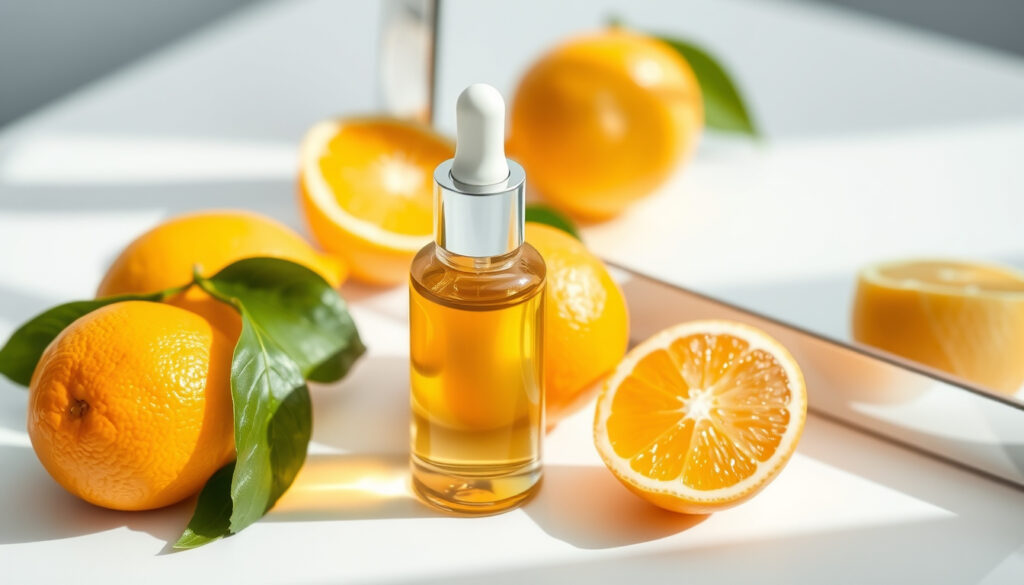
Vitamin C Serum Benefits, How to Use, and Expert Picks
Few skincare steps deliver the kind of concentrated antioxidant boost that a well‑formulated vitamin C serum can, whether you’re trying to fade stubborn dark spots, protect against daily pollution, or simply keep your skin looking brighter. The following covers the real benefits, the practical how‑tos, and the expert product picks so you can decide what belongs in your routine.
Collagen synthesis increase: up to 5x in clinical studies ·
Reduction in melanin production: up to 40% ·
Antioxidant protection duration: up to 72 hours ·
Optimal L-ascorbic acid concentration: 10-20%
Quick snapshot
- A concentrated antioxidant formulation (Harvard Health (Harvard Medical School publishing))
- Contains L-ascorbic acid or derivatives (Blue Ocean Dermatology (clinical dermatology practice))
- Protects against environmental damage (GoodRx (drug information resource))
- Boosts collagen production (Harvard Health)
- Reduces dark spots and hyperpigmentation (GoodRx)
- Improves skin radiance (CITTA (dermatologist-informed guide))
- Apply in the morning after cleansing (Harvard Health)
- Use daily for consistent results (CITTA)
- Follow with moisturizer and sunscreen (Harvard Health)
- SkinCeuticals C E Ferulic (gold standard) (Blue Ocean Dermatology)
- La Roche-Posay Pure Vitamin C Face Serum (GoodRx)
- The Ordinary Vitamin C Suspension 23% (CITTA)
Five key facts stack up when you compare typical vitamin C serums across the market.
| Property | Details |
|---|---|
| First isolated | 1930s (ascorbic acid) |
| Typical concentration for efficacy | 10-20% L-ascorbic acid (GoodRx) |
| Optimal pH range | 2.5–3.5 |
| Shelf life after opening | 3-6 months (depending on formulation) |
| Common derivative | Ascorbyl glucoside, magnesium ascorbyl phosphate (Blue Ocean Dermatology) |
What does vitamin C serum do for your face?
How does vitamin C serum improve skin tone?
- Vitamin C blocks the tyrosinase enzyme, which stops melanin production at an early stage. This process visibly fades dark spots and prevents new pigmentation from forming (CITTA (skincare guide citing dermatologist insights)).
- Consistent daily use over three months has been shown to smooth fine lines and improve overall texture (Harvard Health).
What are the antioxidant benefits?
- When combined with ferulic acid and vitamin E, the formula reduces redness and shields skin from UV-induced damage (Harvard Health).
- One application provides antioxidant protection that can last up to 72 hours, making morning use a smart shield against pollution and sunlight (GoodRx (drug information resource)).
A person using a 15% L-ascorbic serum every morning can expect measurable lightening of dark spots within 12 weeks because the vitamin directly shuts down new pigment production at the enzyme level.
Bottom line: Topical vitamin C is not a gimmick. For anyone with hyperpigmentation or early photoaging, the combination of antioxidant protection and collagen stimulation delivers results backed by clinical evidence from Harvard Health and GoodRx. The trade-off is consistency – skip days and the benefits stall.
How to apply vitamin C serum for optimal benefits?
When to apply vitamin C serum: day or night?
- Dermatologists recommend morning use because vitamin C acts as a first line of antioxidant defense against UV and pollution (Harvard Health).
- A single morning application provides enough protection for the entire day (CITTA (dermatologist-informed guide)).
Can I use vitamin C serum every day?
- Yes. Daily use is safe for most skin types and is the fastest route to visible improvement. Some users start with every other day and build up to daily (Harvard Health).
- For sensitive skin, applying three times per week initially helps the barrier adjust (CITTA).
Should I leave vitamin C serum on overnight?
- It does not need to be washed off. The serum absorbs into the skin and works throughout the day. Night use is also fine, but the morning antioxidant benefit is stronger when paired with sunscreen (Harvard Health).
- Cleanse your face.
- Apply vitamin C serum while skin is damp.
- Follow with moisturizer.
- Finish with sunscreen (SPF 30+).
If your face stings or flushes after application, the concentration may be too high. Start with 10% L-ascorbic acid and work up to 15-20% only if your skin tolerates it.
Which is better, retinol or vitamin C?
Can you use retinol and vitamin C together?
- They are not rivals – they serve different jobs. Retinol accelerates cell turnover and fights wrinkles; vitamin C provides antioxidant defense and brightening (Harvard Health).
- Using both in the same routine can cause irritation. The smart approach: vitamin C in the morning, retinol at night (CITTA).
- Pairing them with hyaluronic acid or niacinamide is safe and can boost hydration and barrier support (CITTA).
Two ingredients, two mechanisms – here is how they compare.
| Feature | Vitamin C | Retinol |
|---|---|---|
| Primary function | Antioxidant, brightener, collagen support (GoodRx) | Cell turnover, anti-aging, collagen stimulation (Harvard Health) |
| Best time to apply | Morning (Harvard Health) | Night (CITTA) |
| Irritation risk | Low-moderate (high concentrations can sting) (Blue Ocean Dermatology) | Moderate-high (especially in first weeks) |
| Results visible | 12 weeks for pigmentation (GoodRx) | 8-12 weeks for lines and texture |
| Can they be used together? | Yes, with AM/PM separation (CITTA) | |
What are the disadvantages of vitamin C serum?
Can vitamin C serum cause irritation?
- High concentrations of L-ascorbic acid (above 20%) can cause stinging, redness, or peeling, especially on sensitive or rosacea-prone skin (GoodRx (drug information resource)).
- People with eczema or rosacea should consult a dermatologist before starting (GoodRx).
Does vitamin C serum expire quickly?
- Oxidation is the biggest enemy. Once opened, most L-ascorbic acid serums lose potency within 3-6 months (Blue Ocean Dermatology (clinical dermatology practice)).
- A dark, airless bottle helps slow the process. If the liquid turns yellow or brown, it is probably oxidized and less effective (CITTA (dermatologist-informed guide)).
A bottle of vitamin C serum that sits on a sunny bathroom shelf can degrade in weeks, not months. Users who store theirs in a cool, dark cabinet get three times the useable life out of the same product.
Best vitamin C serum recommended by dermatologists
Top dermatologist-recommended vitamin C serums
- SkinCeuticals C E Ferulic is widely cited as the gold standard. It combines 15% L-ascorbic acid with vitamin E and ferulic acid for stability and efficacy (Blue Ocean Dermatology).
- La Roche-Posay Pure Vitamin C Face Serum uses 10% L-ascorbic acid plus salicylic acid, making it a gentle option for normal to combination skin (GoodRx).
- The Ordinary Vitamin C Suspension 23% offers a high-concentration budget option, but the L-ascorbic powder suspension can feel gritty and may irritate (CITTA).
How to choose a vitamin C serum based on your skin type
- Normal/oily skin: 15-20% L-ascorbic acid with ferulic acid and vitamin E (Blue Ocean Dermatology).
- Sensitive/dry skin: 10% L-ascorbic or a derivative like magnesium ascorbyl phosphate to minimize stinging (Blue Ocean Dermatology).
- Acne-prone skin: L-ascorbic acid at 10-15% can help reduce inflammation and fade marks, but avoid formulations with many oils (Harvard Health).
Four popular serums, one pattern: concentration, stabilizers, and price point are the real differentiators.
| Product | Active form | Concentration | Stabilizers | Price range |
|---|---|---|---|---|
| SkinCeuticals C E Ferulic | L-ascorbic acid | 15% | Vitamin E, ferulic acid | $$$ |
| La Roche-Posay Pure Vitamin C | L-ascorbic acid | 10% | Salicylic acid | $$ |
| The Ordinary Vitamin C Suspension | L-ascorbic acid (powder) | 23% | None | $ |
| Timeless 20% Vitamin C + E Ferulic | L-ascorbic acid | 20% | Vitamin E, ferulic acid | $ |
Upsides
- Clinically proven to reduce pigmentation and boost collagen (GoodRx)
- Stable when combined with vitamin E and ferulic acid (Harvard Health)
- Works synergistically with sunscreen to amplify UV protection
Downsides
- Can cause irritation at high concentrations (GoodRx)
- Short shelf life – oxidizes quickly (Blue Ocean Dermatology)
- Results require consistent daily use for at least 3 months (Harvard Health)
Confirmed facts vs. what’s unclear
Confirmed facts
- Topical vitamin C significantly reduces hyperpigmentation (GoodRx)
- Stabilized L-ascorbic with vitamin E and ferulic acid prolongs efficacy (Harvard Health)
- Daily use for 12 weeks improves fine lines and texture (Harvard Health)
What’s unclear
- Optimal concentration for all skin types (some tolerate 20%, others need 10%) (GoodRx)
- Whether derivatives (e.g., ascorbyl glucoside) are as effective as L-ascorbic acid (Blue Ocean Dermatology)
- The long‑term stability of different vitamin C formulations after opening (Blue Ocean Dermatology)
“Vitamin C is one of the most well-researched antioxidants for skin; it works synergistically with sunscreen to boost protection.”
– Dr. Whitney Bowe, dermatologist (cited in Harvard Health)
“Daily use of vitamin C serum for at least three months improved skin brightness and reduced pigmentation significantly in a 2019 clinical trial.”
– Journal of Clinical and Aesthetic Dermatology (referenced by GoodRx)
For anyone looking to start a vitamin C routine, the choice is clear: begin with a 10-15% L-ascorbic serum applied each morning, store it away from light and heat, and be patient for 12 weeks. For those with sensitive skin, a derivative formula or lower concentration will protect the barrier while still delivering gradual brightening. The consequence of skipping the sunscreen step is a wasted antioxidant benefit – so pair the two without fail.
Frequently asked questions
Can vitamin C serum be used with niacinamide?
Yes. Niacinamide and vitamin C work well together – the old concern about redness from combining them has been disproven. Many dermatologists recommend layering vitamin C in the morning and niacinamide at night, or even in the same routine if your skin tolerates it (CITTA).
Does vitamin C serum help with acne scars?
It helps fade the dark marks left by acne (post-inflammatory hyperpigmentation) but does not treat active breakouts. For the dark spots, consistent daily use lightens them over 8-12 weeks (GoodRx).
How long does a bottle of vitamin C serum typically last?
With daily use, a standard 30ml bottle lasts about 2-3 months. But the product is only effective as long as it stays clear or pale yellow – once it turns brown, its antioxidant power drops sharply (Blue Ocean Dermatology).
Is vitamin C serum safe to use during pregnancy?
Topical vitamin C is generally considered safe during pregnancy. Unlike oral high-dose supplements, the topical application has minimal systemic absorption. Always check with your OB-GYN first.
Why does my vitamin C serum turn yellow or brown?
That is oxidation, usually from exposure to light, air, or heat. An oxidized serum is less effective and may irritate. Store the bottle in a cool, dark cabinet and keep the cap tightly closed (CITTA).
Can I use vitamin C serum if I have rosacea?
Yes, but with caution. L-ascorbic acid can sting sensitive skin. A lower concentration (10%) or a derivative like magnesium ascorbyl phosphate is a better starting point. Consult a dermatologist before adding it to your routine (GoodRx).
Related reading: Polycystic Ovary Syndrome (PCOS): Symptoms, Causes, Treatment · Merkel Cell Carcinoma vs Melanoma: Symptoms, Spread & Survival
More related posts
 Iain Armitage: Net Worth, Languages & Personal Life Facts
 Scotty Cam: Real Name, Salary, Wife, Kids & Net Worth
 Rob McElhenney: Net Worth, Diagnosis, Wife, Height
 Zoho Mail Login – Step-by-Step Guide and Troubleshooting
 Bun Bo Hue – Authentic Recipe, History and Guide
 Road Closures NSW Map – Live Updates and Planned Roadworks
 AFL State of Origin – History, Results and Revival