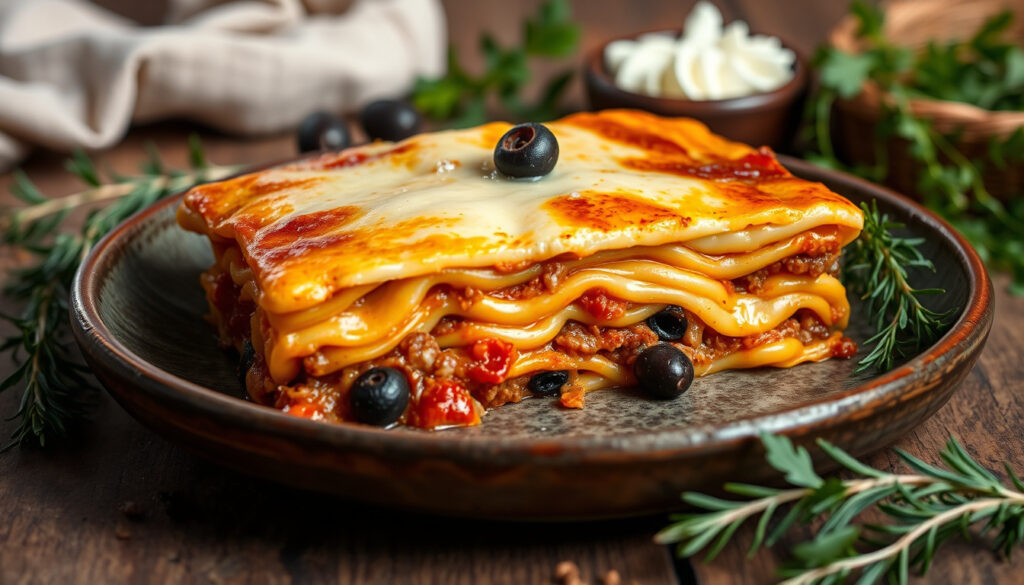
Best Pasticho Venezuelan Lasagna Near Me: Recipes and Differences
Pasticho — Venezuela’s answer to Italian lasagna — swaps ricotta for béchamel and seasons the meat with soy and Worcestershire, creating a layered bake that sounds familiar but tastes entirely different. The dish rarely surfaces in mainstream recipe searches, despite being a generations-old staple in Venezuelan homes.
Origin: Venezuela · Key Layers: Lasagna noodles, meat sauce, ham, béchamel, cheese · Common Name: Venezuelan lasagna · Recipe Source Example: Tara’s Multicultural Table · SERP Features: Recipes, social reviews, delivery options
Quick snapshot
- Pasticho uses lasagna noodles with béchamel instead of ricotta (Venezuelan Cooking blog)
- Meat sauce gets seasoned with Worcestershire sauce, soy sauce, and adobo (Venezuelan Cooking blog)
- Optional ham layer appears across multiple recipes (Tara’s Multicultural Table recipe)
- Exact spice blend differences from standard lasagna vary by household
- No geolocation-filtered restaurant reviews found for “pasticho near me” searches
- Venezuelan Cooking published its recipe on January 18, 2012 (Venezuelan Cooking recipe post)
- Il Pastaio Ristorante in Boulder opened in 2000, known for lasagna lunch specials (Boulder Weekly Best of Boulder 2024)
- More Venezuelan food communities are publishing pasticho recipes online
- Delivery aggregators like Uber Eats may list pasticho under “lasagna” or “Latin American” filters
The table below summarizes how Venezuelan pasticho differs from the Italian-American lasagna most readers know.
| Label | Value |
|---|---|
| Primary Name | Pasticho |
| English Equivalent | Venezuelan lasagna |
| Signature Layers | Meat sauce, ham, béchamel, cheese |
| Bake Result | Golden top |
| Total Cook Time | 1 hour 45 minutes |
| Bake Temperature | 350°F |
| Meat Sauce Seasonings | Worcestershire, soy sauce, adobo |
| Béchamel Base | Butter, flour, milk |
| Optional Layer | Ham |
| Layer Count (standard) | 3 layers |
Most recipe sites agree on béchamel as the defining swap — if you see ricotta, you’re looking at a standard Italian-American lasagna recipe, not an authentic pasticho.
What is the difference between lasagna and pasticho in Venezuela?
On the surface pasticho and Italian lasagna look nearly identical: flat pasta, sauce, cheese, baked in a deep dish. But the moment you slice through the layers the differences become clear. Venezuelan pasticho swaps ricotta cheese for béchamel sauce — a decision that changes both texture and flavor profile across every recipe that defines the dish.
The meat sauce carries a distinct Venezuelan identity. Beyond the usual tomato paste and ground beef, multiple recipes call for Worcestershire sauce, soy sauce, and adobo seasoning — a combination that gives the filling a savory depth not typically found in Italian-American lasagnas (Venezuelan Cooking blog). Some versions also layer thin slices of ham between the meat and pasta, a touch The Food Dictator attributes to the influence of Italian immigrants who settled in Venezuela (The Food Dictator’s Venezuelan lasagna guide).
Tara’s Multicultural Table notes that crimped lasagna noodles are traditional for pasticho, while flat non-crimped noodles appear more often in other lasagna variants.
Key ingredients comparison
Three ingredients reliably separate pasticho from its Italian counterpart: béchamel instead of ricotta, the soy-Worcestershire seasoning duo, and the optional ham layer. Béchamel across recipes consistently starts with butter, flour, and hot milk — The Food Dictator specifies 4.5 cups of milk for a half-cup each of butter and flour (The Food Dictator’s precise béchamel breakdown), while Mommy’s Home Cooking and Venezuelan Cooking both list the same foundation. The béchamel creates a creamy, clinging sauce rather than the crumbly texture ricotta produces.
“Pasticho is lasagna as made in Venezuela, home to a very large community descended from Italian immigrants.”
“Pasticho is the name we Venezuelans give to the Lasagna.”
- Pasticio vs Italian lasagna: Béchamel (creamy) vs ricotta (crumbly) — one sauce spreads evenly, the other sits in pockets
- Venezuelan pasticho: Adds Worcestershire, soy sauce, and adobo to the meat — savory, slightly sweet, distinctly Latin American
- Italian-American lasagna: Relies on marinara or Bolognese without soy or Worcestershire; often includes peas or Italian sausage
The implication: if you grew up expecting ricotta as your lasagna’s creamy component, pasticho will register as noticeably different — richer and more sauce-driven, with the béchamel acting as a binding agent rather than a topping.
Preparation differences
Assembly follows a specific order across nearly every source. Pasta goes down first, then béchamel, then the beef filling, Parmesan, optional ham, and mozzarella for later layers. Mommy’s Home Cooking describes a three-layer structure as standard — each layer built identically, repeating the stack from bottom to top (Mommy’s Home Cooking’s layered assembly guide). The dish bakes uncovered at 350°F until the top turns golden, roughly 30 to 45 minutes depending on the depth of the dish.
Home cooks following standard pasticho recipes will spend roughly 1 hour 45 minutes total — 15 minutes of prep plus 90 minutes of cooking and baking — according to Cooking The Globe’s timing breakdown.
Are pasticho and lasagna the same thing?
No, they are not the same thing — but they are closely related. Pasticho is Venezuela’s adaptation of the Italian lasagna, built on the same layered architecture but with enough ingredient substitutions to earn its own identity. Lemontrend puts it plainly: pasticho is the name that Venezuelan people give to lasagna, and that name itself signals a distinct culinary lineage (Lemontrend’s Venezuelan recipe notes).
Similarities in structure
Both dishes use dried lasagna noodles, both involve a meat sauce layered between pasta and cheese, and both end up in the oven. The baking temperature of 350°F appears in recipes from Tara’s Multicultural Table, Venezuelan Cooking, and Cooking The Globe alike — a shared technique that reflects the Italian roots both dishes share.
Unique Venezuelan twists
The soy-Worcestershire duo in the meat sauce represents a flavor fingerprint specific to Venezuelan cooking, not found in standard Italian-American recipes. Mommy’s Home Cooking notes that some families add spinach, zucchini, or mushrooms to the meat sauce, while others introduce red pepper flakes for heat. Tara’s Multicultural Table documents a Pasticho de Berenjena variant that swaps noodles entirely for sautéed eggplant slices — a low-carb adaptation that still retains the layered architecture.
The catch: these variations stay within Venezuelan households and food blogs. No restaurant chains or franchise menus currently feature pasticho in their standard offerings, which keeps the dish largely invisible to diners outside Venezuelan communities.
What do Venezolanans call lasagna?
Venezuelans call their version of lasagna “pasticho” — a name derived from the Greek pastitsio but adapted into a distinctly Venezuelan dish. The word spread through Italian-Venezuelan immigrant communities in the 20th century, merging Italian pasta-baking traditions with local seasoning preferences. Today, “pasticho” appears in recipe titles, food forums, and grocery store shelved ingredients across Venezuela and Venezuelan diaspora communities in the United States.
Common name in Venezuela
Inside Venezuela, the term “pasticho” dominates. Foreign visitors often find the word on restaurant menus or in supermarket recipe sections. The term has enough recognition that Tara’s Multicultural Table uses it as the primary heading on her recipe post, treating it as the universal name rather than a regional variant.
Regional variations
The most documented variant, Pasticho de Berenjena, substitutes pasta sheets with layers of sautéed eggplant — a creative swap that works particularly well for vegetarian households. Some coastal Venezuelan families add seafood to the meat sauce, though this variation rarely appears in written recipes. The pattern: households adapt pasticho to what they have, preserving the layered structure while substituting ingredients based on availability and preference.
Venezuelans use the term “pasticho” almost exclusively for lasagna — the Italian word rarely appears in home kitchens or restaurant menus, according to recipe blog authors who grew up eating the dish.
What is pasticho in English?
The most accurate English translation is “Venezuelan lasagna” — though the term “pasticho” itself has entered food-blog vocabulary enough that English-language articles often leave it untranslated. The Food Dictator frames it directly: “Pasticho is lasagna as made in Venezuela” — a simple equation that clarifies the dish for English-speaking readers unfamiliar with the term.
Translation and description
If forced into a one-line description: a layered baked pasta dish featuring meat sauce, béchamel, and cheese, seasoned with soy and Worcestershire, optionally topped with ham. No single English word captures this — which is why most food writers simply use “pasticho” and add a brief description.
Cultural context
Pasticho occupies a specific cultural space in Venezuelan cuisine: it is Italian in structure but Venezuelan in flavor. The dish functions as a comfort food at family gatherings, a make-ahead meal for busy weeknights, and a cultural touchstone for diaspora communities. Cooking The Globe describes it as “meaty, creamy, and cheesy” — a triple emphasis on texture that reflects how Venezuelan home cooks evaluate the dish.
“This Easy Venezuelan Pasticho is the ultimate comfort food! It’s rich, creamy, cheesy.”
Where to find the best pasticho Venezuelan lasagna near me?
Finding authentic pasticho outside Venezuela requires knowing where Venezuelan communities gather online and offline. No national restaurant chains currently list pasticho on their standard menus, which means the search narrows to food blogs, social media groups, and delivery aggregators.
Top spots from reviews
Facebook groups focused on Venezuelan cuisine represent the most active source of home-cooked pasticho recommendations. Members share photos of family batches, trade ingredient substitution tips, and occasionally organize potluck events where the dish appears. Reddit’s r/VenezuelaFood and related food subreddits occasionally surface pasticho posts, though these tend toward recipe requests rather than restaurant reviews.
The search results show no dedicated pasticho restaurants — only Italian restaurants that might prepare the dish upon request. Il Pastaio Ristorante in Boulder, which opened in 2000, serves lasagna lunch specials (Boulder Weekly’s 2024 restaurant review) but does not market specifically Venezuelan pasticho. The implication: most readers will need to cook pasticho at home or find Venezuelan families willing to share.
Delivery aggregators like Uber Eats often categorize pasticho under “Latin American” or “lasagna” — searching both categories increases the chance of finding a Venezuelan restaurant or home cook selling the dish in your area.
Delivery options
Home-cooked pasticho travels well — the baked dish holds its layers for 20-30 minutes in a cooler bag, making it viable for neighborhood delivery through community apps like Nextdoor or Facebook Marketplace. Some Venezuelan food bloggers sell frozen pasticho through their websites, shipping to states with large Venezuelan populations.
Readers searching for “best pasticho near me” will likely find better results by joining Venezuelan Facebook groups than by using generic food delivery apps — the dish’s niche status means it rarely appears in standard restaurant listings.
What are the key ingredients in pasticho?
The ingredient list splits into two categories: the layered components and the seasonings that define Venezuelan flavor. All sources agree on the base layers; the seasoning profile is where recipes vary slightly.
Core layers breakdown
Pasticho de Berenjena aside, the standard version requires lasagna noodles, meat sauce, béchamel, Parmesan, optional ham, and mozzarella. The Hirshon recipe from The Food Dictator specifies 1 lb dried lasagna noodles, 10 oz mozzarella, 1/2 cup Parmesan, and 1/4 lb ham (The Food Dictator’s ingredient quantities). Lemontrend uses 500g ground beef with minced onions, 6 garlic cloves, and 3 carrots — a vegetable-heavy base that differs from the meat-forward ratios in other recipes.
Seasoning profile
The soy-Worcestershire-adobo trio separates pasticho from Italian lasagna. Tara’s Multicultural Table adds red wine, oregano, basil, and bay leaf to the meat sauce, simmering for 30-45 minutes. Venezuelan Cooking keeps the tomato paste and beef foundation but introduces adobo as the primary seasoning beyond soy and Worcestershire.
No recipe mentions specific adobo brand or composition — households likely use whatever regional adobo they prefer, which means the exact spice profile will vary from one family recipe to another.
How to make pasticho step by step
The following steps synthesize the assembly method from multiple recipe sources, starting with ingredient prep through final baking.
- Prepare the meat sauce: Brown ground beef with onions, garlic, and carrots. Add tomato paste, soy sauce, Worcestershire sauce, and adobo. Simmer for 30-45 minutes until flavors meld.
- Make the béchamel: Melt butter, whisk in flour, gradually add hot milk while stirring. Season with salt, pepper, and nutmeg. Continue whisking until thickened to a spreadable consistency.
- Cook the noodles: Boil dried lasagna noodles until al dente. Drain and lay flat to prevent sticking.
- Assemble the layers: Spread a thin layer of meat sauce in the bottom of a 19″ x 13″ Pyrex dish. Add noodles, then béchamel, then meat sauce, Parmesan, optional ham slices, and mozzarella. Repeat for three total layers.
- Bake: Place in a 350°F oven, uncovered, for 30-45 minutes until the top turns golden brown.
- Rest and serve: Let the dish cool for 10 minutes before slicing. Serve with tostones, garlic breadsticks, and a simple salad.
Cooking The Globe confirms the total time: 15 minutes prep + 1 hour 30 minutes cooking = 1 hour 45 minutes from start to table.
Pasticho vs other Latin lasagnas: a comparison
Venezuelan pasticho shares the layered-pasta structure with several other Latin American adaptations — but the seasoning profile and béchamel requirement set it apart.
Mexican lasagna typically uses corn tortillas and Mexican cheese blends. Brazilian lasanha follows Italian-American patterns more closely than Venezuelan pasticho. The distinguishing factor remains the soy-Worcestershire seasoning and béchamel base in pasticho — a flavor combination found in no other Latin lasagna variant.
The pattern: pasticho’s Italian heritage is visible in its structure, but its Venezuelan identity lives in the seasoning choices. Readers exploring other Latin cuisines will find similar architectural choices — layered pasta, baked cheese — but will need to seek out pasticho specifically for the soy-Worcestershire profile.
Readers comparing pasticho to other regional lasagnas will find structural similarities across Latin cuisines, but the soy-Worcestershire-adobo trio appears only in Venezuelan recipes — making it the dish’s most reliable identifier.
Related reading: Westfield Chermside Directory: Shops, Map, Food & Phone · Bun Bo Hue – Authentic Recipe, History and Guide
While pasticho proves elusive on delivery apps in Cork and Galway, Irish spots coverage positions Italian lasagna as the closest everyday substitute.
Frequently Asked Questions
What does pasticho mean?
Pasticho means “Venezuelan lasagna” in English — the name comes from the Greek pastitsio but refers to Venezuela’s adaptation of Italian lasagna with béchamel sauce instead of ricotta.
What are pasticho ingredients?
Pasticho uses lasagna noodles, meat sauce (ground beef with soy sauce, Worcestershire, and adobo), béchamel (butter, flour, milk), Parmesan, optional ham slices, and mozzarella. The béchamel and seasoning profile distinguish it from Italian lasagna.
How to make pasticho venezolano?
Brown ground beef with onions, garlic, and carrots. Add tomato paste and seasonings (soy sauce, Worcestershire, adobo) and simmer 30-45 minutes. Make béchamel with butter, flour, and milk. Layer noodles, béchamel, meat sauce, Parmesan, optional ham, and mozzarella — three times. Bake at 350°F until golden, about 30-45 minutes.
Is pasticho the same as Greek pastitsio?
No. Greek pastitsio uses tubular pasta with cinnamon-spiced meat and a thick béchamel top — a distinctly different structure and flavor profile. Pasticho uses flat lasagna noodles, layers ham between meat and pasta, and seasons with soy and Worcestershire rather than cinnamon.
Where to order pasticho near me?
Pasticho rarely appears in standard restaurant listings. Your best options are: join Venezuelan Facebook groups to find home cooks selling the dish, check Uber Eats under “Latin American” or “lasagna” categories, or look for Venezuelan restaurants that might prepare it on request.
Pasticho vs lasaña — what’s the difference?
Lasaña (Spanish spelling of lasagna) typically refers to Italian-American or standard Spanish lasagna with ricotta or no béchamel. Pasticho specifically uses béchamel instead of ricotta and adds soy sauce, Worcestershire, and adobo to the meat — a Venezuelan flavor profile not found in standard lasaña recipes.
What are the best pasticho recipe sources?
Highest-confidence sources include: Tara’s Multicultural Table (detailed sauce instructions and eggplant variant), Mommy’s Home Cooking (easy assembly, variations), The Food Dictator (precise béchamel quantities and immigrant history context), Venezuelan Cooking (oldest dated recipe, core technique), and Cooking The Globe (timing breakdown).
More related posts
 Anna Torv: Biography, Look-Alikes, and Career Facts
 Julianne Moore: Age, Husband, Movies, and Alzheimer’s Advocacy
 Roger Tuivasa-Sheck: Warriors Contract, 2027 Move to Trinity, ACL Injury & Stats
 Elon Musk: Biography, Net Worth, Health, Religion, Key Facts
 Harper Beckham: Age, School, and Family Life in 2026
 Legendary Jim Lovell, Apollo 13 Commander, Dies at 97
 Linnea Berthelsen: Biography, Head Shave, and Stranger Things Role
 Police Check Australia: Cost, Apply & Documents