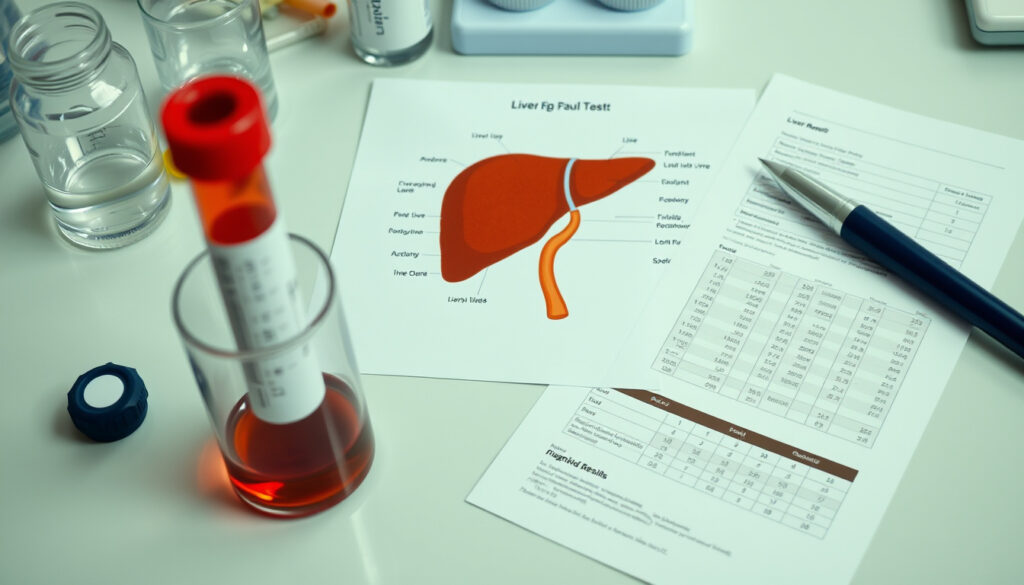
LFT Blood Test: What It Includes, Results, and Next Steps
Few medical tests come with as much anxiety as a liver function test, but the truth is more reassuring than the numbers suggest. An LFT blood test measures six key components—enzymes like ALT and AST, plus proteins and bilirubin—to create a snapshot of your liver’s health, and this guide explains what each component means, why results sometimes fall outside normal ranges, and exactly what to do if your numbers come back flagged.
Components typically measured: 6: ALT, AST, ALP, GGT, bilirubin, albumin ·
Normal ALT range (typical lab): 7–56 U/L ·
Normal AST range: 10–40 U/L ·
Prevalence of abnormal LFTs: Approximately 1 in 20 routine blood tests show an abnormality ·
Leading cause of liver disease globally: Non‑alcoholic fatty liver disease (NAFLD)
Quick snapshot
- LFT measures ALT, AST, ALP, GGT, bilirubin, and albumin (Mayo Clinic)
- Abnormal results warrant further investigation (PMC Guidelines)
- Elevated enzymes can stem from medications, alcohol, fatty liver, or viral hepatitis (British Liver Trust)
- The exact cause of an isolated mild elevation may remain unknown without further tests (PMC Guidelines)
- Accuracy of at‑home liver function test kits versus lab testing is not well established (NHS)
- If <2x upper limit of normal (ULN), repeat tests are recommended; an alcohol‑related elevation may normalize after 1 month of abstinence (NHS SPS)
- In 1 in 3 cases, abnormal results spontaneously normalize within 3 weeks (British Liver Trust)
- Review past blood tests and medical history before undertaking further investigation (PMC Guidelines)
- If elevation persists >2‑3x ULN, imaging (ultrasound, elastography) and specialist referral are standard next steps (NHS SPS)
What does the LFT blood test include?
A standard LFT panel typically measures six separate components. Each offers a different window into your liver’s health—some look for cell damage, others for how well the organ is doing its job. Understanding which number does what is the first step to making sense of your results.
Key enzymes measured
The most talked‑about markers are ALT (alanine transaminase) and AST (aspartate transaminase). When liver cells are damaged, they leak these enzymes into the bloodstream. ALT is considered the more liver‑specific of the two. ALP (alkaline phosphatase) and GGT (gamma‑glutamyl transferase) are linked to the bile ducts. Raised ALP together with raised GGT often points to a bile duct problem, while isolated GGT elevation can be related to alcohol consumption (British Liver Trust (patient guidance)).
Proteins and bilirubin
Bilirubin is a yellow waste product from the breakdown of old red blood cells. The liver processes it and sends it into bile. When the liver is struggling, bilirubin accumulates and can turn your skin or eyes yellow. Albumin is a protein made entirely by the liver; low levels can indicate chronic liver disease. Total protein is also measured as a general marker of liver synthetic function (Mayo Clinic (diagnostic reference)).
Six components, one pattern: each marker tells a distinct story—ALT/AST signal cell injury, ALP/GGT hint at bile flow problems, and bilirubin/albumin reveal how well the liver is processing waste and synthesizing proteins.
| Component | Typical normal range | What it reflects |
|---|---|---|
| ALT | 7–56 U/L | Liver cell damage |
| AST | 10–40 U/L | Liver or muscle damage |
| ALP | 44–147 IU/L | Bile duct integrity |
| GGT | Varies by lab, often 8–61 U/L | Bile duct or alcohol‑related stress |
| Total bilirubin | 0.3–1.2 mg/dL | Liver processing capacity |
| Direct bilirubin | 0–0.3 mg/dL | Bile flow obstruction |
| Albumin | 3.5–5.0 g/dL | Liver synthetic function |
| Total protein | 6.0–8.3 g/dL | General liver health |
A single elevated number rarely tells the full story. PMC Guidelines (clinical best practice) stress that the pattern of elevations—not the absolute values—usually points to the underlying cause. That’s why doctors rarely panic over one abnormal value.
What happens if LFT is high?
High liver enzymes can be alarming, but they are surprisingly common and frequently resolve on their own. Approximately 1 in 20 routine blood tests shows an abnormality, and in 1 in 3 cases the results return to normal within three weeks without any intervention (British Liver Trust (patient statistics)).
Common causes of elevated LFTs
- Medications: Over‑the‑counter pain relievers like acetaminophen, statins, and some antibiotics can raise liver enzymes temporarily.
- Alcohol: Heavy or chronic drinking can elevate GGT and AST disproportionately.
- Non‑alcoholic fatty liver disease (NAFLD): The most common global cause of abnormal LFTs, often linked to obesity and insulin resistance.
- Viral hepatitis: Hepatitis B and C infections can cause persistent enzyme elevation.
- Statistically normal variation: About 2.5% of the healthy population will have values above the reference limit simply because of how normal ranges are calculated (NHS RUH Pathology (guidance document)).
When to see a doctor
The decision to investigate further depends on how high the levels are. According to NHS Specialist Pharmacy Service (algorithm for abnormal LFTs), the approach is stepped:
- Less than twice the upper limit of normal (<2x ULN): Repeat the test in a few weeks. If alcohol is a factor, abstain and retest in one month.
- 2–3 times ULN or higher: Further investigation is needed, starting with imaging (often an ultrasound) and a liver aetiology screen.
- Marked elevation (>1000 IU/L for ALT or AST): This suggests acute drug injury or viral hepatitis and often requires urgent referral.
The extent of an abnormality is not a reliable guide to its clinical significance. According to PMC Guidelines (clinical policy review), even small elevations can indicate underlying disease, while some very high readings can be transient and benign. Context matters.
The trade-off: being aggressive with testing catches serious disease early, but over‑investigating minor fluctuations creates unnecessary anxiety and cost. Trust the step‑wise protocol.
What does an abnormal LFT blood test mean?
An abnormal result does not automatically mean you have liver disease. It simply means at least one of the measured values falls outside the lab’s reference range. Reference ranges themselves vary by lab, by a person’s sex, by age, and even by the time of day the blood was drawn (British Liver Trust (reference variability)).
Patterns of liver injury: hepatocellular vs cholestatic
- Hepatocellular pattern: Predominantly raised ALT and AST. This suggests direct liver cell injury from causes like viral hepatitis, drug toxicity, or NAFLD.
- Cholestatic pattern: Predominantly raised ALP and GGT (with bilirubin possibly raised). This suggests a problem with bile flow, such as a bile duct obstruction or drug‑induced cholestasis (PMC Guidelines (pattern recognition)).
- Mixed picture: Both groups of enzymes are elevated. Causes can include alcoholic hepatitis or certain medications.
Next steps after an abnormal result
The PMC Guidelines (investigation protocol) recommend that any abnormal LFT be investigated with a full liver aetiology screen—even if the elevation is mild. This screen typically includes viral serology for hepatitis B and C, iron studies, autoimmune markers, and an ultrasound of the liver.
The catch: an abnormal LFT is a starting point, not a diagnosis. The real value lies in the pattern of elevation combined with your personal health history.
What are four warning signs of a damaged liver?
While blood tests are the gold standard for detecting liver trouble, your body also sends signals. The liver has a remarkable capacity to keep working even when damaged, so symptoms often appear only when the problem is advanced. Still, four warning signs are worth knowing (Mayo Clinic (symptom guide)):
Jaundice: yellow skin and eyes
When bilirubin builds up—because the liver cannot process it or because a blocked bile duct prevents its removal—the skin and whites of the eyes take on a yellow tint. It is often one of the most visible and unmistakable signs.
Dark urine and pale stools
Urine that is dark (like tea or cola) and stools that are unusually pale or clay‑colored can point to obstructive jaundice. Bilirubin ends up in urine when the liver cannot excrete it through bile into the intestines.
Persistent fatigue
Chronic, unexplained fatigue is one of the most common early complaints in liver disease. It is often dismissed as stress or lack of sleep, but when paired with other signs it should raise a red flag.
Swelling in legs and abdomen
When the liver cannot produce enough albumin—a protein that keeps fluid inside blood vessels—fluid can leak into tissues, causing swollen ankles and a distended abdomen (ascites).
The pattern: these four signs rarely appear alone. Jaundice plus dark urine is a stronger signal than either on its own.
Why would a doctor order an LFT test?
Doctors order LFTs for several distinct reasons, and knowing which category you fall into can help you understand the urgency of the results.
Routine screening and health checks
LFTs are often included in routine wellness panels, especially for people with risk factors such as obesity, heavy alcohol use, or a family history of liver disease. The test acts as an early‑warning system (NIDDK (screening rationale)).
Monitoring medication side‑effects
Certain medications—including statins, methotrexate, and some antiepileptics—can affect the liver. Doctors monitor LFTs before and during treatment to catch early signs of drug‑induced liver injury (FDA (drug safety guidance)).
Evaluating symptoms of liver disease
If you present with any of the warning signs above, or with less specific symptoms like nausea, abdominal pain, or loss of appetite, an LFT is among the first tests a doctor will order to rule out liver involvement (Mayo Clinic (diagnostic use)).
Roughly 1 in 20 routine blood tests returns an abnormal LFT. British Liver Trust (population data) notes that a large portion of these will self‑correct. The test is a safety net, not a verdict.
“Liver function tests are used to screen for liver damage, monitor disease progression, and assess treatment response.”
— StatPearls via NCBI (clinical reference)
“Reference ranges vary by lab, by a person’s sex, by age, and even by the time of day the blood was drawn.”
— British Liver Trust (reference variability)
“The pattern of elevations—not the absolute values—usually points to the underlying cause.”
— PMC Guidelines (pattern recognition)
What this means for you: Understanding why your doctor ordered the test helps you interpret the urgency and follow-up required.
Specifications: LFT blood test
Seven core parameters, one pattern: each has a typical range that varies by lab, but the reference values below are widely used by accredited laboratories.
| Parameter | Typical normal range | What abnormal indicates |
|---|---|---|
| ALT | 7–56 U/L | Hepatocellular injury |
| AST | 10–40 U/L | Liver or muscle damage |
| ALP | 44–147 IU/L | Bile duct or bone issues |
| GGT | 8–61 U/L (varies) | Bile duct stress, alcohol use |
| Total bilirubin | 0.3–1.2 mg/dL | Liver processing or bile flow |
| Direct bilirubin | 0–0.3 mg/dL | Bile flow obstruction |
| Albumin | 3.5–5.0 g/dL | Liver synthetic function |
| Total protein | 6.0–8.3 g/dL | General liver health |
The takeaway: These ranges are guidelines; your lab’s specific reference values may differ, so always compare your results to the ranges printed on your report.
Pros and cons of the LFT blood test
Upsides
- Fast and minimally invasive (standard blood draw)
- Provides a broad health snapshot in a single panel
- Helps detect liver damage before symptoms appear
- Widely available and low cost (typically covered by insurance)
Downsides
- Reference ranges vary between labs, causing confusion
- Normal variations in 2.5% of healthy individuals
- Does not pinpoint the cause of an abnormality
- False reassurance if only one normal result is obtained
Bottom line: The LFT is a valuable screening tool, but it’s only one piece of the diagnostic puzzle—use it alongside your doctor’s assessment.
Confirmed facts and what remains unclear
Confirmed facts
- LFT measures ALT, AST, ALP, GGT, bilirubin, and albumin (Mayo Clinic)
- Abnormal results require further investigation (PMC Guidelines)
- Elevated enzymes can be caused by medications, alcohol, fatty liver, and viral hepatitis (British Liver Trust)
What’s unclear
- The exact cause of an isolated mild elevation often remains unknown without additional testing
- The accuracy of at‑home liver function test kits compared to laboratory testing has not been robustly validated
- The reliability of isolated mild elevations in predicting future liver disease is not well understood
Key insight: Despite uncertainties, the established facts provide a solid foundation for making informed decisions with your healthcare provider.
Frequently asked questions
What color is pee when the liver is failing?
Dark urine—often described as the color of tea, cola, or strong coffee—can indicate elevated bilirubin levels, a sign of liver dysfunction or a blocked bile duct (Mayo Clinic).
How do I tell if my liver is struggling?
Common early signs include persistent fatigue, loss of appetite, nausea, and discomfort in the upper right abdomen. Later signs include jaundice, dark urine, and swelling (British Liver Trust). A blood test is the most reliable way to confirm.
What is one of the first signs of liver disease?
Chronic fatigue is often reported as one of the earliest symptoms, but it is nonspecific. Many people only discover liver issues when routine blood tests show abnormal enzymes (Mayo Clinic).
How to check fatty liver in blood test?
Fatty liver often shows up as mild to moderate elevation of ALT and AST. Imaging—typically an ultrasound or elastography—is needed to confirm fatty infiltration. Blood tests alone cannot definitively diagnose fatty liver (NIDDK).
LFT blood test fasting or not?
Fasting is not always required, but some labs recommend fasting for 8–12 hours if GGT or triglycerides are being measured, because food can affect these values. Always follow your lab’s specific instructions (NHS).
How to check liver function at home?
At‑home finger‑prick test kits that measure ALT or GGT are available, but their accuracy compared to lab testing is not well established. They may provide a rough indicator but should not replace professional medical evaluation.
Remember: These FAQs address common concerns, but always consult a healthcare professional for personalized advice.
Related reading
An abnormal LFT blood test is rarely a crisis—it is a signal to pay attention, not a verdict. For the millions of people whose routine blood work shows one or two slightly elevated enzymes, the path is clear: repeat the test, review your health history, and follow the step‑wise protocol your doctor recommends. For anyone with persistent elevation or signs of advanced liver disease, the consequence of ignoring it is progression to irreversible damage. Your choice is clear: act on the signal now, or risk waiting until symptoms appear.
More related posts
 Tiffany Haddish: Marriage, Children, Sobriety & Net Worth (2025)
 KG to G Converter: How to Convert Kilograms to Grams
 Violet McGraw: Age, Sister, Movies & Facts, Not Twins
 Jerry Hall: Biography, Net Worth, and Divorce Settlements
 Tupac Shakur Cause of Death: The Final Days and Last Words
 Lucy Punch: Age, Husband, Children, and Career Facts
 Jean Reno: Career, Best Films, and Biography
 Egyptian Gods: 9 Major Deities and Their Roles