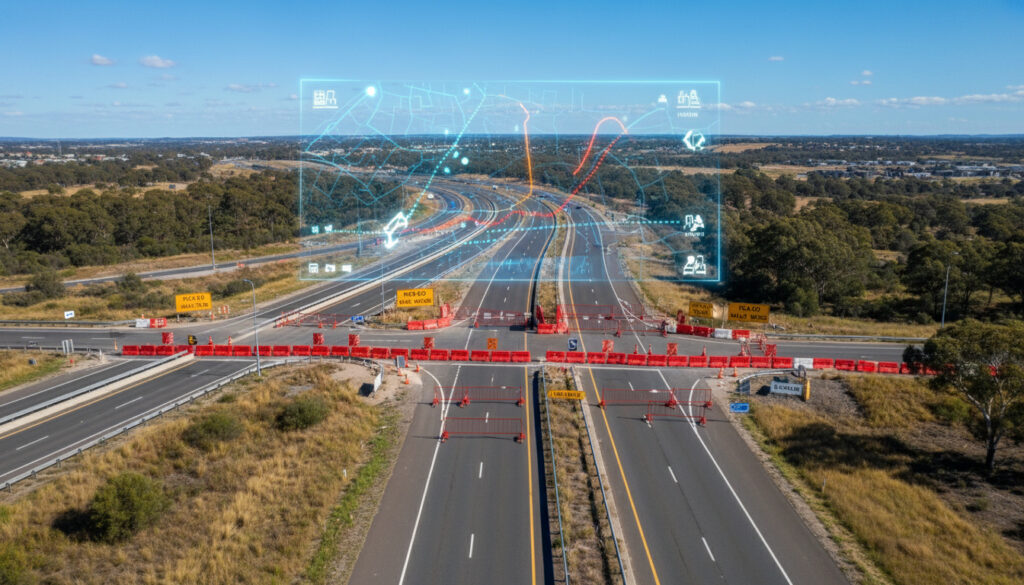
Road Closures NSW Map – Live Updates and Planned Roadworks
Navigating New South Wales requires real-time awareness of road conditions spanning 18,000 kilometers of state-managed highways and local routes. The Transport Management Centre operates the official Live Traffic NSW platform, delivering immediate updates on crashes, flood damage, scheduled roadworks, and cross-border incidents affecting connections to Queensland, Victoria, South Australia, and the ACT.
Drivers seeking immediate clarity on route viability face a fragmented landscape of council advisories, weather alerts, and third-party navigation tools. Official verification remains critical when safety incidents or bushfire seasons trigger rapid infrastructure changes across Sydney’s metropolitan corridors and regional access roads.
Where to Find the Official NSW Road Closures Map
livetraffic.com
All NSW roads/highways
Real-time 24/7
Web/iOS/Android
The centralized mapping system divides coverage into Greater Sydney—segmented into Inner, South, North, and West zones—and extensive regional networks beyond the metropolitan boundary. Users accessing regional breakdown specifications find detailed boundaries: Inner Sydney spans from the Harbour Bridge to Alfords Point, while Western coverage extends to the lower Blue Mountains.
- Network scope encompasses 18,000 kilometers of state-managed roads
- Transport Management Centre maintains continuous 24/7 operational monitoring
- Traffic camera feeds refresh imagery every 60 seconds
- Cross-border incident tracking covers QLD, VIC, SA, and ACT entry points
- Integrated data layers include NSW Rural Fire Service locations and Bureau of Meteorology warnings
- Northern NSW local road data supplements via myroadinfo.com.au integration
- Mobile applications available on both Google Play and Apple App Store
| Metric | Details |
|---|---|
| Total Network Monitored | 18,000 km state roads |
| Primary Operator | Transport Management Centre (TMC) |
| Geographic Divisions | 4 Sydney sectors + Regional NSW |
| Incident Categories | Crashes, fires, floods, snow, roadworks |
| Camera Refresh Rate | 60 seconds |
| Interstate Coverage | QLD, VIC, SA, ACT borders |
| Mobile Platforms | iOS 447303817, Android variants |
| Emergency Integration | NSW SES, RFS, BOM feeds |
Current Road Closures in NSW: Live Status
Real-time status feeds distinguish between full closures, partial lane restrictions, and advisory warnings. The system processes incidents ranging from single-vehicle breakdowns on the Hume Highway to multi-day flood isolations in Northern Rivers districts.
Sydney Metropolitan Monitoring
Inner Sydney coverage captures the CBD, eastern suburbs from Watsons Bay to La Perouse, and inner west corridors including Lidcombe and Strathfield. Southern zones extend from Liverpool to Waterfall, encompassing Kurnell and the Royal National Park. Northern monitoring reaches the Hawkesbury River Bridge and Northern Beaches, while Western coverage handles the lower Blue Mountains to Katoomba.
Regional and Rural Coverage
Beyond the metropolitan boundary, the map tracks incidents on highways connecting coastal centers to inland agricultural regions. Shoalhaven City Council maintains supplementary local road closure data for council-controlled routes affected by weather emergencies.
The Transport Management Centre maintains continuous surveillance of the state road network, clearing incidents and updating status feeds around the clock. Data latency remains minimal for major highways, though localized council roads may experience reporting delays during widespread weather events.
Cross-Border Incident Alerts
Drivers crossing into Queensland, Victoria, South Australia, or the ACT receive continuity of coverage for incidents impacting border approaches. This integration prevents sudden routing disruptions at state lines where jurisdictional transitions often complicate traffic management.
How to Check and Use Live Road Closures on NSW Map
Effective navigation requires understanding the interface layers beyond basic map visualization. Users optimize route planning through personalized alert systems and camera verification tools.
Web Interface Navigation
The browser-based platform allows incident filtering by region, severity, and incident type. Travelers save frequent routes to receive automatic notifications when disruptions occur along saved corridors. The interactive layer displays both planned roadworks and unplanned emergencies with distinct visual markers.
Mobile Application Features
Native applications for Android devices and iOS provide offline-accessible saved routes with push notifications for saved areas. The app supports personalized trip planning with alerts for specific geographic zones rather than entire regions.
Camera and Alert Systems
Strategically positioned traffic cameras update every 60 seconds, allowing visual confirmation of congestion or incident clearance. Users save camera locations for rapid access during commute planning. Fire location data from the NSW Rural Fire Service overlays on the base map during bushfire seasons.
Planned Roadworks and Future Closures in NSW
Scheduled maintenance and infrastructure upgrades generate approximately eighty percent of published closures, contrasting with twenty percent stemming from emergency incidents. Long-term projects appear on the mapping system months in advance, enabling commuters to establish alternative routines before construction commences.
Major infrastructure upgrades appear on the map months in advance, allowing commuters to adjust regular routes before construction begins. Seasonal roadworks often intensify during SA Public Holidays – 2024, 2025 Dates and Rules periods when traffic volumes shift across state borders.
Highway Maintenance Schedules
Major corridors including the Pacific Highway, Princes Highway, and Great Western Highway undergo regular maintenance windows. Night work typically reduces lane capacity without full closures, while weekend projects may require complete detours onto alternative routes.
User feedback indicates occasional gaps in real-time reporting, particularly for rapidly developing crashes on the Hume Highway or localized flooding in Taree. Cross-referencing live camera feeds with incident notifications provides the most reliable verification during active weather events.
Weather-Dependent Closures
Flood and fire events trigger dynamic closures not captured in scheduled roadworks data. During widespread storms, council-controlled local roads may close while state highways remain open, creating navigation complexities. Drivers should contact NSW SES on 132 500 for flood-specific advice or Triple Zero for life-threatening emergencies.
Road Closure Timeline: From Immediate to Long-Term
- Immediate Incidents (0–4 hours): Vehicle crashes, breakdowns, and emergency services operations appear instantly on the map as TMC operators verify field reports.
- Weather Events (Variable duration): Flood closures, bushfire impacts, and snow chain requirements persist until Bureau of Meteorology conditions clear and engineers assess infrastructure safety.
- Weekly Maintenance (1–7 days): Emergency road repairs and urgent utility works disrupt traffic for short periods with temporary lane restrictions.
- Scheduled Roadworks (1–6 months): Highway upgrades, bridge maintenance, and resurfacing projects follow published timetables with advance warning signage.
- Major Infrastructure (6+ months): Tunnel construction, bypass development, and motorway widening projects alter traffic patterns across multiple seasons.
Verified Conditions vs. Pending Reports
| Established Information | Information Remaining Unclear |
|---|---|
| TMC-verified incidents on state-controlled roads with 24/7 monitoring | Hyper-local council road statuses during rapidly evolving flood events |
| Planned roadworks published 48+ hours ahead through official channels | Unplanned local shire advisories lacking digital feed integration |
| Bureau of Meteorology weather warnings and official flood classifications | Real-time water depth measurements on specific flooded road segments |
| NSW Rural Fire Service fire location data and containment boundaries | Precise reopening estimates for complex multi-vehicle crash scenes |
The Causes Behind NSW Route Disruptions
Traffic flow interruptions stem primarily from scheduled infrastructure maintenance, accounting for roughly four-fifths of all published closures. The remaining fifth comprises emergency incidents including vehicle collisions, bushfire evacuations, and flood isolations during severe weather periods.
Seasonal patterns influence closure frequencies, with holiday periods like School Holidays Easter 2026 – UK, Australia & US Dates Guide generating simultaneous increases in maintenance windows and tourist traffic volumes. Cross-state travelers should note that border regions experience compounded effects when adjoining states coordinate joint highway maintenance.
Environmental factors drive unpredictability, particularly along coastal floodplains and bushfire-prone escarpments. The integration of live fire data and flood warnings creates a composite risk picture, though local council roads may close independently of state highway status during these events.
Authority Statements and Data Sources
Official documentation confirms the Transport Management Centre’s operational mandate covering the entire 18,000-kilometer network. Developer communications acknowledge ongoing refinement of data feeds, particularly regarding flood incident integration and expanded local council connectivity.
Transport Management Centre monitors 24/7 to clear incidents quickly and provide accurate data across the state road network.
— Live Traffic NSW Operational Documentation
Developers respond by releasing performance updates for flood incidents and 22 local councils, with feedback directed to livetraffic@tmc.transport.nsw.gov.au.
— Application Developer Response, Google Play Store
Key Takeaways for NSW Motorists
Successful navigation of New South Wales roads requires consulting the official Live Traffic NSW platform for real-time verified data, cross-referencing camera feeds during weather events, and maintaining awareness of council-specific closures beyond state highway networks. Drivers planning interstate travel during holiday periods should check SA Public Holidays – 2024, 2025 Dates and Rules to anticipate border traffic patterns.
Frequently Asked Questions
How do I report an unplanned road closure in NSW?
Submit detailed incident reports via email to livetraffic@tmc.transport.nsw.gov.au for verification and map integration. Emergency situations require immediate contact with Triple Zero.
What alternatives exist when major highways close?
The Live Traffic NSW app suggests detours based on real-time capacity, though drivers should verify local council road accessibility during floods.
How does severe weather affect map accuracy?
Floods and fires may delay updates for local council roads. State highways maintain accurate status, but verification against camera feeds remains advisable.
Is the Live Traffic NSW application free to download?
Yes, both iOS and Android versions require no purchase fee and provide full access to real-time incident data and camera feeds.
Does the map provide coverage for interstate travel?
The platform displays cross-border incidents affecting approaches to Queensland, Victoria, South Australia, and the ACT, though detailed navigation within neighboring states requires local resources.
Why do some local roads appear missing from the map?
Council-controlled roads in certain shires lack digital integration, causing reporting delays. Contact local councils directly during emergencies.
How quickly do traffic cameras refresh their images?
Camera feeds update every 60 seconds, providing near real-time visual confirmation of traffic conditions and incident clearance.
More related posts
 What Is a Nonce in Security? Definition, Uses & Examples
 iPhone 16e Price: Ireland Costs, Deals & Comparison
 NRL Live Score Today: Results, Ladder & Updates
 Big W Christmas Tree Guide: Types, Prices & Comparisons
 Winnie the Pooh: Characters, Mental Health, and Where to Watch
 Tiffany Haddish: Marriage, Children, Sobriety & Net Worth (2025)
 Daniel Sunjata: Biography, Ethnicity, Marriage, and Adoption
 SA Public Holidays – 2024, 2025 Dates and Rules