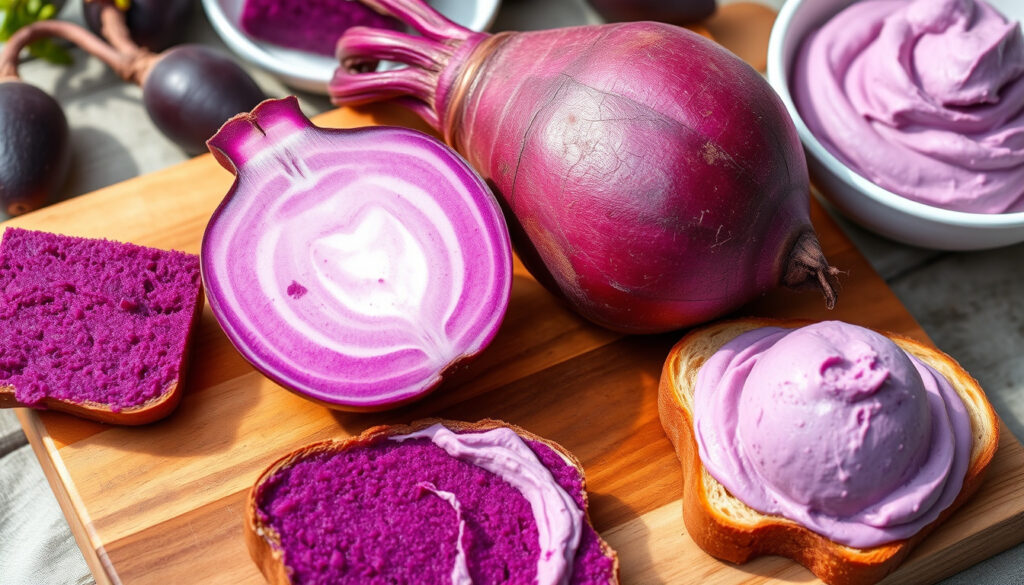
What Is Ube? The Purple Yam’s Taste, Benefits & Uses
You’ve spotted ube on menus and supermarket shelves, its vivid purple hue hard to miss. This Filipino yam has quietly moved from traditional kitchens into global dessert culture. Here we break down ube’s flavor, its health credentials, and how it really differs from taro—so you can decide what to do with it.
Botanical name: Dioscorea alata · Common name: Purple yam / ube · Native region: Philippines · Key nutrients: Carbohydrates, potassium, vitamin C
Quick snapshot
- Ube is a yam species Dioscorea alata (WebstaurantStore)
- Native to the Philippines (WebstaurantStore)
- Sweet, nutty, vanilla‑like flavor (WebstaurantStore)
- Contains anthocyanin antioxidants (Healthline)
- Precise health benefits beyond basic nutrition (Healthline)
- Glycemic index value not precisely established (Healthline)
- Bioavailability of anthocyanins in humans (Healthline)
- Ube has been cultivated in Southeast Asia for centuries (WebstaurantStore)
- Ube is increasingly used in Western desserts and beverages (Healthline)
Seven facts that define ube at a glance:
| Label | Value |
|---|---|
| Botanical name | Dioscorea alata |
| Common name | Purple yam / ube |
| Origin | Southeast Asia (Philippines) |
| Color | Deep purple (flesh), light brown (skin) |
| Flavor | Sweet, nutty, vanilla-like |
| Other names | Greater yam, winged yam, ubi (Indonesia) |
What does ube taste like?
The typical flavor notes
- Ube has a sweet, nutty flavor with subtle vanilla‑like notes, often described as reminiscent of white chocolate or roasted hazelnut (WebstaurantStore).
- The flavor is distinctly aromatic and sweet, setting it apart from most other root vegetables.
How it compares to taro and sweet potato
- Taro has a milder, earthy, slightly nutty flavor, often compared to sweet potato or chestnut, and is less sweet than ube (MyUbeBae).
- Purple sweet potato is starchier and less aromatic than ube (Siocolat).
Ube’s vanilla‑sweet profile makes it a natural fit for desserts, but the same character limits its use in savory dishes—unlike taro, which can go both ways.
The implication: ube’s flavor is its calling card. Its sweetness is what drives the global dessert trend, but it also means you won’t find it in stews.
Is ube just purple sweet potato?
Botanical differences
- Ube is a yam from the species Dioscorea alata (WebstaurantStore).
- Purple sweet potato belongs to Ipomoea batatas (Siocolat).
- They are from different plant families and have distinct starches and growing habits.
Culinary and nutritional differences
- Ube is sweeter, softer when cooked, and more aromatic than purple sweet potato.
- Nutritionally, both are starchy, but ube contains more anthocyanins (the purple pigment) (Healthline).
The catch: many products labelled “purple yam” are actually purple sweet potato. Check the ingredient list if you want real ube.
What is ube in English called?
Common English names
- Ube is also called purple yam, greater yam, or winged yam (WebstaurantStore).
- The scientific name Dioscorea alata is used in botanical contexts.
Regional variations
- In Indonesia it’s known as ubi.
- In English‑speaking markets, “ube” has become the accepted term, especially in food media and packaging.
The pattern: “ube” traveled directly from Tagalog into English menus, bypassing literal translation.
Is ube healthy?
Nutritional profile
- A 100‑gram serving of ube provides about 118 calories, 27 g carbohydrates, 4 g fiber, and notable amounts of vitamin C, potassium, and manganese (Siocolat).
- It is a good source of complex carbs and dietary fiber (WebstaurantStore).
Potential health benefits
- Ube is rich in anthocyanins, antioxidants that may help reduce inflammation and oxidative stress (Healthline).
- Some studies suggest anthocyanins may support blood pressure and blood sugar regulation (Healthline).
- Ube has a lower glycemic index than white potatoes, which may make it better for blood sugar management (Healthline).
Are there any downsides?
- Ube is still a starchy carbohydrate; portions should be moderate (Healthline).
- Many ube dessert products add sugar and cream, reducing nutritional value.
Ube offers real antioxidant benefits, but the trendy ube latte or ube cheesecake likely contains more sugar than yam. Whole, boiled ube is the healthiest choice.
What this means: ube can be a nutrient‑dense carb source, but its health halo depends on how you eat it.
What is ube vs taro?
Botanical differences
- Ube is a yam (Dioscorea alata); taro comes from Colocasia esculenta (Siocolat).
- Taro flesh is white or light purple with tiny purple specks; ube flesh is deep purple (Siocolat).
Flavor and texture comparison
- Ube is sweet and vanilla‑like; taro is earthy and nutty, less sweet (MyUbeBae).
- Ube becomes soft and creamy when cooked; taro stays slightly firmer and drier.
Culinary uses
- Ube is used mainly in desserts: ube halaya, ice cream, cakes (MyUbeBae).
- Taro appears in both sweet and savory dishes: bubble tea, chips, stews (Yoyo Foods).
Two things, one pattern: ube is the dessert star; taro is the versatile utility player.
Confirmed facts
- Ube is a yam (Dioscorea alata) (WebstaurantStore)
- Native to the Philippines (WebstaurantStore)
- Sweet, vanilla‑like flavor (WebstaurantStore)
- Contains anthocyanins (Healthline)
What’s unclear
- Precise health benefits beyond basic nutrition (Healthline)
- Exact glycemic index of ube (Healthline)
- Long‑term effects of ube consumption in humans
- Bioavailability of anthocyanins in vivo (Healthline)
- Degree of confusion with purple sweet potato in popular culture
“Ube is another word for the purple yam, an edible tuber plant – like the potato – known for its distinctive colour.”
— BBC Bitesize
“The purple yam (ube) is a starchy root vegetable that’s a great source of carbs, potassium, and vitamin C.”
— Healthline
For home cooks tempted by the ube trend, the choice is clear: use whole, boiled ube for health, or treat ube desserts as occasional indulgences. Don’t confuse it with taro—they are not interchangeable.
Frequently asked questions
What is ube fruit? Is ube a fruit or a vegetable?
Ube is a tuber, a root vegetable, not a fruit. It is the underground stem of the yam plant.
What is ube drink made of?
Ube drink is typically made by blending cooked ube with milk, sugar, and ice, or mixing ube powder/paste with milk. It can also be steeped in tea.
What is ube at Starbucks?
There is no official Starbucks ube drink on the permanent menu in the US. Some locations have offered limited‑time ube drinks, and customers often order custom ube lattes by adding ube powder.
What is ube coffee? How to make ube coffee?
Ube coffee is a latte made by adding ube powder or jam to espresso and steamed milk, giving a purple colour and sweet, nutty flavour.
What is ube matcha?
Ube matcha is a layered beverage combining ube paste and matcha green tea, often with milk, creating a purple‑green swirl.
What’s up with the ube food trend? Why is it so popular?
The ube trend grew through social media, where its striking purple colour makes highly shareable photos. Filipino diaspora and adventurous eaters have driven demand, and brands have responded with ube‑flavoured products.
Can you eat ube raw?
No, ube should be cooked before eating. Raw ube is hard, starchy, and difficult to digest. Always boil, bake, or steam it.
How do you pronounce ube?
Ube is pronounced “OO‑beh” (two syllables), with the stress on the first syllable.
Related reading
More related posts
 Caroline Wilson: Biography, Walkley Awards, Husband & More
 Tyriq Withers: Biography, Height, Relationships, and Family
 James Brolin Biography: Age, Net Worth, Health, and Marriage
 MacBook Pro M4: Specs, M4 Pro Comparison & Lifespan
 Angourie Rice: Biography, Movies & Languages
 NEM Share Price: Live Quote, Forecast & Analyst Targets
 Charlize Theron: Biography, Tragedy, Relationships, and Net Worth
 Matthew Lloyd: Bell’s Palsy, Career, Wife, Children & Now