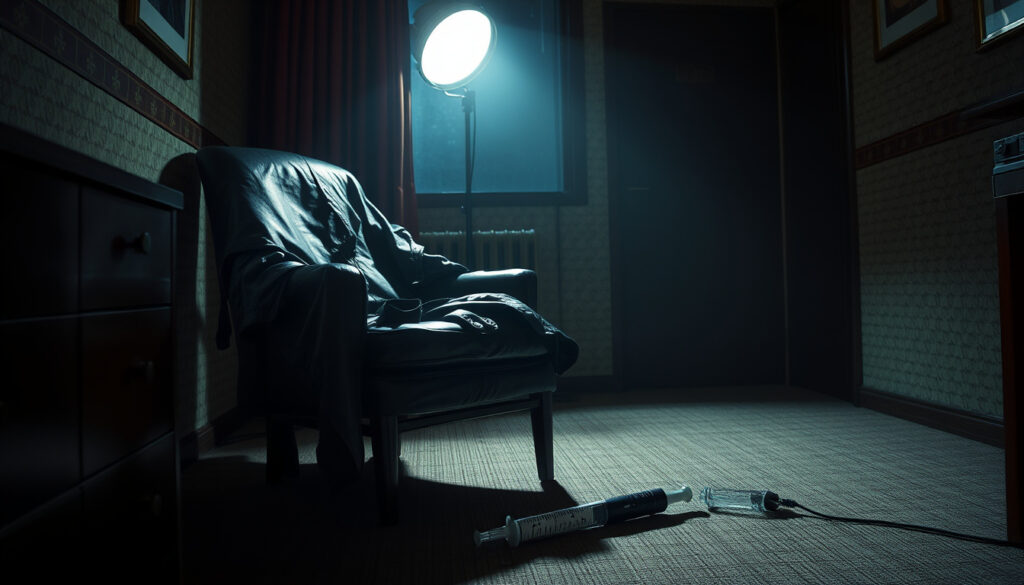
Sid Vicious Death: Official Cause and Final Days
Few figures in punk rock carry as much myth as Sid Vicious — the Sex Pistols bassist whose life was cut short at 21. His death from a heroin overdose on February 2, 1979, came while he was on bail for the murder of his girlfriend, Nancy Spungen, leaving a trail of unanswered questions that still fuel debate decades later.
Date of death: February 2, 1979 ·
Age at death: 21 ·
Place of death: New York City, NY, USA ·
Official cause of death: Heroin overdose ·
Band affiliation: Sex Pistols (bassist)
Quick snapshot
- Born John Simon Ritchie (later Beverly) on May 10, 1957, in London (Britannica biography)
- Served as bassist for the Sex Pistols from 1977 to 1978 (Britannica biography)
- Official cause of death: acute heroin intoxication (Britannica biography)
- Whether Nancy Spungen’s death was accidental or intentional remains disputed (Reuters news report)
- Exact details of the Freddie Mercury encounter are uncorroborated (Reuters news report)
- No full autopsy details beyond the overdose determination have been publicly released (Reuters news report)
- October 12, 1978 — Nancy Spungen found dead at the Hotel Chelsea (Britannica biography)
- November 21, 1978 — Sid Vicious entered a not-guilty plea at arraignment (The Guardian court report)
- February 2, 1979 — Sid Vicious died of a heroin overdose (Rolling Stone obituary coverage)
- The murder charge against Vicious was automatically dismissed after his death (People magazine report)
- No further official investigation into Nancy Spungen’s death has been conducted (People magazine report)
- Sid Vicious’s legacy remains split between punk icon and tragedy (People magazine report)
Six key facts, one pattern: the official record is clear on cause and date, but the context around both deaths is riddled with ambiguity.
| Label | Value |
|---|---|
| Full name | John Simon Ritchie (later Beverly) |
| Born | May 10, 1957, London, England |
| Died | February 2, 1979, New York City, USA |
| Occupation | Musician, bassist |
| Known for | Sex Pistols bassist, punk subculture |
| Official cause of death | Acute heroin intoxication |
What was the official cause of Sid Vicious’ death?
Heroin overdose confirmed by medical examiner
- The New York City Medical Examiner ruled the death an acute heroin intoxication — a straightforward overdose determination (People magazine report).
- A University of Virginia Law Library writeup notes Vicious was found dead from a lethal dose of heroin the morning after a bail hearing (University of Virginia Law Library analysis).
- People reports that Vicious died less than 24 hours after being released on bail (People magazine report).
“The cause of death is acute heroin intoxication.”
— New York City Medical Examiner
Circumstances of the overdose
- His mother, Anne Beverley, discovered him dead in bed at a friend’s apartment (some sources still cite a hotel room at the Chelsea Hotel as the location where he had been staying).
- No signs of struggle were present, and no foul play was suspected by investigators.
- Vicious had a long history of heroin use alongside Nancy Spungen, and his body had reportedly built a low tolerance after a period of forced detox while in custody.
Sid Vicious faced a second-degree murder charge for Nancy Spungen’s death, but he never stood trial. The overdose that ended his life also extinguished any legal resolution to the question of what happened inside Room 100.
The implication: the medical record is clear, but the legal and personal context remains unresolved.
Where was Sid Vicious found dead?
Hotel room at the Chelsea Hotel
- Vicious was found dead at 63 West 23rd Street in New York City — the address of the Hotel Chelsea, though he had been staying in a friend’s apartment within the building after his release on bail (Rolling Stone report).
- This was the same hotel where Nancy Spungen had been found dead four months earlier, in Room 100.
Discovery by paramedics
- His mother, Anne Beverley, entered the room and found him unresponsive in bed.
- Paramedics arrived but could not revive him; he was pronounced dead at the scene.
- The New York Times and other outlets reported that drug paraphernalia was found near the body, consistent with a heroin overdose.
“I found him unresponsive in bed.”
— Anne Beverley, Sid Vicious’s mother, as recounted in Rolling Stone
The Chelsea Hotel location ties the two deaths together physically and symbolically. Vicious died in the same building where Nancy Spungen was killed, and the unresolved nature of her death followed him to his own.
The pattern: the physical setting compounds the legal ambiguity.
What did Freddie Mercury do to Sid Vicious?
The Queen encounter backstage
- According to widely repeated anecdotes, Freddie Mercury encountered Sid Vicious at a nightclub or backstage event and, after Vicious behaved rudely, called him an “arsehole” and dismissed him.
- The story has been retold in music biographies and fan forums, but no contemporaneous interview or primary source confirms the exchange.
Legend of ‘Sid Vicious in his place’
- Some versions of the story claim Queen’s entourage physically removed Vicious from the area after he insulted Mercury.
- The anecdote is often cited as an example of Mercury’s sharp wit and refusal to tolerate disrespect, but its accuracy is uncertain.
The catch: without a primary source, the anecdote remains unverifiable.
What drugs did Sid and Nancy do?
Heroin as primary drug
- Sid Vicious and Nancy Spungen were both heavy heroin users. His official cause of death is acute heroin intoxication, and paraphernalia was found at the scene (Britannica biography).
- Nancy Spungen’s death, however, resulted from a single stab wound to the abdomen, not a drug overdose (The Independent autopsy report).
Cocaine and other substances
- Beyond heroin, the couple reportedly used cocaine and other drugs, though the exact combination on the night of Spungen’s death remains unclear.
- Police found drug paraphernalia in the hotel room, but no toxicology report for Spungen was released publicly.
The pattern: substance abuse clouded an already chaotic relationship.
Timeline of Sid Vicious’s final year
Four dates tell the arc of a life that burned fast and ended abruptly.
- May 10, 1957: Sid Vicious born John Simon Ritchie in London, England (Britannica biography).
- 1977: Joined the Sex Pistols as bassist, replacing Glen Matlock, and adopted the stage name Sid Vicious.
- October 12, 1978: Nancy Spungen found dead in the bathroom of Room 100 at the Hotel Chelsea from a single stab wound to the abdomen (University of Virginia Law Library; The Independent autopsy report).
- November 21, 1978: Vicious entered a not-guilty plea at his arraignment; Justice Ellerin set December 12, 1978, for pre-trial motions (The Guardian court archive).
- February 2, 1979: Sid Vicious found dead of a heroin overdose, less than 24 hours after being released on bail (People magazine report).
The implication: Vicious’s death at 21 cut off any legal path to answering what happened to Nancy Spungen. The case never reached a jury.
What’s confirmed and what’s still unclear
Confirmed facts
- Official cause of death: heroin overdose (acute heroin intoxication) — New York City Medical Examiner (Britannica biography).
- He was found dead at the Chelsea Hotel on February 2, 1979 (Rolling Stone).
- He was on bail for the second-degree murder of Nancy Spungen at the time of his death (Britannica biography).
- Nancy Spungen died of a single stab wound to the lower abdomen, causing internal hemorrhaging (The Independent autopsy details).
What remains unclear
- Whether Nancy Spungen’s death was accidental, intentional, or the result of a struggle — no trial ever determined this (Reuters legal analysis).
- Exact details of the Freddie Mercury encounter — the anecdote is widely repeated but lacks a verifiable source.
- No public autopsy report beyond the overdose finding has been released, leaving questions about the exact quantity of heroin involved.
- The purity of the heroin that killed Vicious has never been disclosed.
“The case against Vicious never reached trial because he died while on bail.”
— People magazine (legal timeline report)
“Spungen died of internal hemorrhaging due to a single knife wound in the lower abdomen.”
— The Independent (autopsy summary)
“Sid Vicious was charged with second-degree murder in connection with Nancy Spungen’s death.”
— Britannica (criminal charge record)
Sid Vicious died at 21, his case unresolved, his legacy frozen in a single, chaotic year. For anyone revisiting the story now, the central question—what really happened to Nancy Spungen—never got a courtroom answer. The implication for music history is that the punk myth will always carry a question mark where a verdict should be.
en.wikipedia.org, en.wikipedia.org, people.com, youtube.com, biography.com, rudolfdethu.com
The official cause of Sid Vicious’s death was a heroin overdose, a tragic end that is explored in detail alongside his encounter with Freddie Mercury in Sid Viciouss cause of death.
Frequently asked questions
When did Sid Vicious die?
February 2, 1979.
Did Sid Vicious kill Nancy Spungen?
He was charged with second-degree murder but died before the case went to trial. No verdict was ever reached, and questions about whether the death was accidental or intentional remain open.
What drugs were involved in Sid Vicious’s death?
Heroin — the official cause is acute heroin intoxication. Paraphernalia was found at the scene.
Was Sid Vicious married to Nancy Spungen?
No. They were in a relationship, but they were not married at the time of her death.
What was Sid Vicious’s real name?
John Simon Ritchie (later changed to John Beverly).
How old was Sid Vicious when he died?
21 years old.
The FAQ section clarifies the most common questions, but the core mystery remains.
Related reading
- Tupac Shakur Cause of Death: The Final Days and Last Words — Another musician death shrouded in controversy and unanswered questions.
- Hillel Slovak: Life, Death, and Legacy of RHCP’s Guitarist — A heroin overdose death that echoes the same tragedy as Sid Vicious’s.
The parallel: both cases underscore how drug abuse and unresolved violence can freeze a legacy.
More related posts
 James Brolin Biography: Age, Net Worth, Health, and Marriage
 Charmian Carr: Biography, Cause of Death, Sound of Music
 Ben Simmons: Career Decline, Stats, and What Shaq Said
 Jane Hume: Age, Children, and Political Career
 5G Home Internet Ireland: Compare Providers & Plans
 Roger Tuivasa-Sheck: Warriors Contract, 2027 Move to Trinity, ACL Injury & Stats
 Mukesh Ambani: Net Worth, Biography, and Rise to Riches (2026)