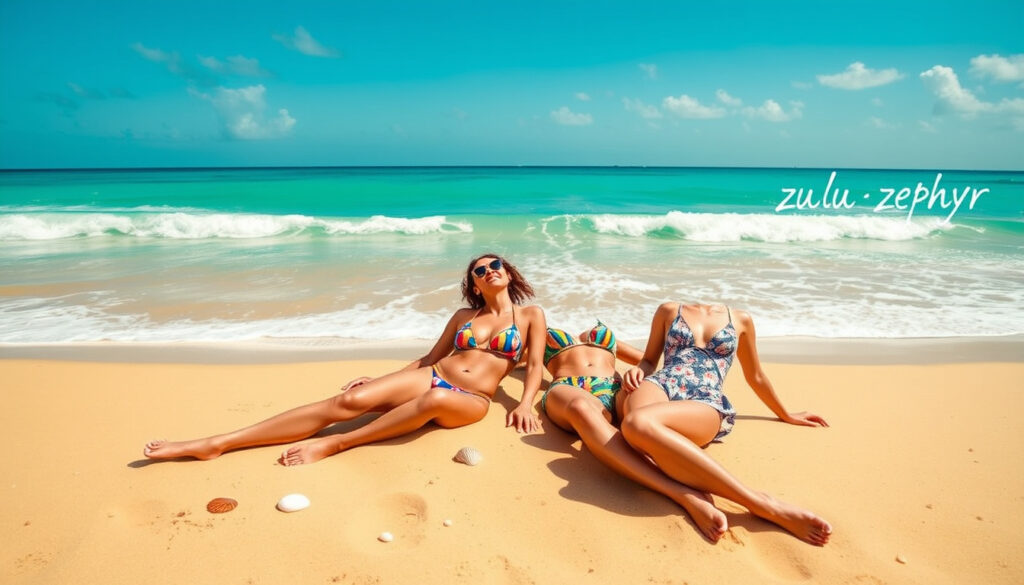
Zulu and Zephyr – Complete Australian Swimwear Guide
Zulu and Zephyr represents a distinctive chapter in Australian fashion history. Founded by sisters Karla and Candice in Byron Bay around 2013, the brand emerged during a period when independent swimwear options remained remarkably scarce in Australia. What began as a mission to fill that gap has evolved into a lifestyle label celebrated for its commitment to timeless design, sustainable practices, and storytelling-driven approach. The brand’s very name encapsulates its core philosophy—drawing from Zulu cultural heritage to evoke strength and leadership, while Zephyr brings to mind a gentle, floating breeze that speaks to relaxation and coastal living.
Operating from Australia’s sun-drenched eastern coastline, Zulu and Zephyr has cultivated a devoted following among women seeking swimwear and resort wear that transcends seasonal trends. The label’s signature aesthetic blends earthy tones with hand-drawn prints, creating pieces that feel both personally curated and effortlessly versatile. With concept stores in Bondi Beach and Byron Bay, plus retail partnerships spanning multiple continents, the brand has grown from humble beginnings into an internationally recognized name while maintaining the intimate character of a small creative enterprise.
Understanding the Zulu and Zephyr Brand Identity
The duality embedded in Zulu and Zephyr’s name reflects the brand’s broader design philosophy. According to the founders, the label embodies characteristics that appear contradictory yet coexist harmoniously—balanced yet spontaneous, strong yet relaxed, dynamic yet signature. This tension between opposing forces shapes everything from product development to marketing campaigns, creating an aesthetic language that resonates with women navigating multiple roles and environments throughout their day.
Core Values Driving the Label
Four principles anchor every decision at Zulu and Zephyr. Fit perfection stands as the foundation, with garments engineered to flatter diverse body types through extensive testing and refinement. Quality materials receive equal attention, with the team prioritizing durable fabrics that maintain their integrity season after season. Storytelling connects each piece to broader narratives—whether inspired by vintage aesthetics, coastal landscapes, or personal artworks created by the founders themselves. Sustainability has become increasingly central since 2019, when the brand undertook a comprehensive assessment of its environmental footprint and began transitioning toward regenerative practices.
The Zulu reference draws from the Zulu Nguni ethnic group of South Africa, honoring traditions of leadership and strength associated with founder Zulu kaMalandela. The brand maintains no direct cultural ties but has committed to ongoing education about the heritage embedded in its name, recognizing both the significance and sensitivity of this borrowing.
Design Philosophy and Visual Language
Timelessness supersedes trend-following at Zulu and Zephyr. Rather than chasing seasonal fads, the design team creates pieces intended for longevity—both in terms of physical durability and aesthetic relevance. The resulting wardrobe staples encourage customers to build lasting relationships with their garments rather than treating them as disposable commodities. This approach manifests most clearly in the Signatures collection, which has remained fundamentally unchanged since its introduction while receiving iterative improvements in colorways and minor construction refinements.
The visual language draws heavily from coastal Australian environments and artistic expression. Hand-drawn prints featuring florals, stripes, and organic shapes appear throughout collections, often originating from artworks created by the founders or their collaborators. These distinctive patterns create instant recognizability while maintaining the personal, artisanal quality that distinguishes the brand from mass-market alternatives. Color palettes favor earthy browns, crisp whites, and sun-washed tones, occasionally punctuated by brighter accents that evoke tropical exploration and coastal adventure.
Key Facts About Zulu and Zephyr
Sisters Karla and Candice
Byron Bay, Australia
Swimwear, resort wear, ready-to-wear
Approximately 2013
Essential Insights
- Launched when independent swimwear brands were virtually nonexistent in Australia, filling a significant market gap
- Operates with a compact 15-person creative team that maintains intimate control over design and brand direction
- Signatures collection pieces have documented durability exceeding eight years with proper care
- Sustainability pivot in 2019 positioned the brand ahead of emerging eco-fashion consumer expectations
- Expanding sizing options now include fuller-bust support and thong brief variations
- Concept stores operate in Bondi Beach and Byron Bay, with international retail partnerships
- US website launched to serve growing North American customer base
Snapshot Facts
| Aspect | Details |
|---|---|
| Abbreviation | ZZ |
| Team Size | Approximately 15 creative staff members |
| Store Locations | Bondi Beach, Byron Bay |
| Key Material | Econyl recycled nylon (since 2020) |
| Signature Collection Age | Introduced over 8 years ago, continuously offered |
| International Presence | Retail partners worldwide, dedicated US website |
| Environmental Goal | Every garment holds at least one environmental credential |
| Artistic Inspiration | Personal artworks influencing prints and silhouettes |
The Significance of Sustainability at Zulu and Zephyr
Environmental responsibility has become inseparable from Zulu and Zephyr’s identity over the past several years. The pivotal moment arrived in 2019 when the brand committed to understanding and reducing its environmental impact. This self-assessment led directly to material substitutions throughout the Signatures collection, replacing virgin resources with recycled alternatives that maintain the quality standards customers expected. The transition proved that sustainability and durability could coexist—that eco-conscious choices need not compromise the longevity that the brand’s loyal customer base had come to appreciate.
Material Innovation and Economic Choices
The adoption of Econyl regenerated nylon exemplifies the brand’s approach to material selection. Econyl derives from discarded fishing nets, fabric scraps, and other waste that would otherwise contaminate landfills or oceans, transforming them into high-performance swimwear fabric. By 2020, this material replacement extended across the entire Signature and Mini collections, demonstrating the scalability of the brand’s initial experiments. The shift required substantial investment in supply chain relationships but aligned every product with the stated goal that every garment should hold at least one environmental credential.
The brand’s broader commitment to sustainability extends to material transparency and ethical production practices, ensuring customers understand the provenance and impact of each purchase.
The Signatures collection transitioned entirely to recycled materials by 2020, with pieces from this era demonstrating the same durability that characterized earlier versions. The founders have confirmed they still own and wear Signature items purchased eight years prior, validating the premise that sustainable choices can enhance rather than diminish product longevity.
Future Environmental Commitments
Looking ahead, Zulu and Zephyr has articulated ambitions that extend beyond material substitutions. Plans for take-back programs would enable customers to return end-of-life garments for proper recycling or repurposing, closing the loop on the linear consumption model that dominates fashion industry practices. Carbon Neutral certification targeted for 2024 represents another milestone, requiring comprehensive accounting of emissions across manufacturing, transportation, and business operations. The brand frames these efforts within a broader vision of regenerative fashion—producing garments that contribute positively to environmental health rather than merely minimizing harm.
Collections and Product Evolution
The Signatures collection occupies a unique position within Zulu and Zephyr’s offerings. Unlike conventional fashion cycles that introduce entirely new lines seasonally, Signatures pieces receive perpetual production with incremental refinements. This approach reflects the founders’ conviction that certain designs achieve a level of fit and aesthetic quality that improves with time rather than aging out of relevance. Customers have responded by building entire warm-weather wardrobes around these cult classics, returning season after season for new colorways and limited capsule releases.
Signature Collection Characteristics
What distinguishes the Signatures line from comparable products lies in its development methodology. Each silhouette undergoes extended testing across diverse body types before receiving the Signatures designation, ensuring that fit perfection becomes standardized rather than accidental. The collection’s introduction of Econyl materials in 2020 added environmental credentials without altering the fundamental character that longtime customers valued. According to brand communications, pieces from the collection “hold at least one environmental credential” while maintaining the comfortable, classic aesthetic that defined earlier iterations.
The Signatures line explicitly rejects expiration dates. Rather than discontinuing silhouettes after a few seasons, the brand commits to offering foundational pieces indefinitely while periodically introducing limited capsules and fresh colorways. This philosophy transforms shopping from seasonal event to ongoing relationship between customer and wardrobe.
Current Collection Directions
Recent collections have expanded both the product range and the size inclusivity. Earthy stripes and coconut denim represent new material experiments that maintain the brand’s commitment to texture and natural aesthetics. Lightweight knits address the resort wear segment, creating transitional pieces suitable for beach-to-bar versatility. Design updates have reimagined the tankini and rash guard formats while introducing fuller-bust support options that acknowledge diverse customer needs. The return of the thong brief completes a design cycle, suggesting that customer preferences move in waves that thoughtful brands can anticipate and accommodate.
The Artistic Foundation of Zulu and Zephyr
Art functions as both input and inspiration throughout Zulu and Zephyr’s creative process. The founders incorporate personal artworks into design development, translating two-dimensional creations into wearable patterns and silhouettes. This translation process preserves the handmade quality and individual expression that machine-produced designs cannot replicate. When customers wear these garments, they carry small representations of artistic vision beyond gallery walls into everyday environments.
Print Development Process
The print development methodology reflects the brand’s artisanal values. Hand-drawn motifs undergo careful refinement before becoming production patterns, with the founders often influencing final designs through their personal aesthetic sensibilities. Floral patterns, stripes, and organic shapes receive equal attention, with each category serving different wardrobe needs and mood expressions. The Surfari Shirt and Short, for instance, emerged directly from artwork created by the founders, demonstrating how personal creative practice translates into commercial products without losing its original character.
Coastal Australian Influence
Geographic location shapes Zulu and Zephyr’s aesthetic profoundly. The Byron Bay setting provides constant exposure to coastal environments—salt air, sun-bleached surfaces, weathered textures—that inform color palettes and material choices. The Resort 21 campaign exemplified this connection, with photography capturing sun-drenched days and tropical exploration in the Byron Bay hinterland. These environmental references ground abstract design principles in tangible experience, creating collections that feel authentic rather than constructed.
Growth Trajectory and Business Development
The expansion of Zulu and Zephyr from local Byron Bay operation to international brand followed organic rather than aggressive trajectories. The founders prioritized maintaining design integrity and brand coherence over rapid scaling, allowing growth to emerge from customer demand rather than forced distribution. This patience has produced a loyal community—the so-called “ZZ women”—who identify with the brand’s values and aesthetic rather than merely purchasing individual products.
Retail Presence Development
Physical retail spaces in Bondi Beach and Byron Bay serve as brand showcases and community gathering points. These concept stores embody the lifestyle the products represent, creating environments where customers can experience the full context of Zulu and Zephyr’s design philosophy. Beyond owned retail, partnerships with international stockists extend the brand’s reach without requiring the capital investment that wholly-owned international expansion would demand. The dedicated US website launch acknowledges the importance of North American markets, providing direct access for customers previously dependent on third-party retailers.
Future Expansion Plans
Plans articulated by the founders indicate intentions to deepen Australian and American retail presence through additional store locations and enhanced e-commerce capabilities. The partnership with Tyde London suggests openness to collaborative projects that extend brand reach while maintaining core identity. Travel plans to Bali, Los Angeles, and Europe indicate continued investment in geographic inspiration, ensuring that future collections remain grounded in experiential research rather than abstract trend forecasting.
Brand History and Key Milestones
- – Zulu and Zephyr founded by sisters Karla and Candice in Byron Bay, launching when independent swimwear brands remained scarce in Australia
- – Focus on personal storytelling and community building around signature fabrics, fits, and prints inspired by vintage aesthetics
- – Pivotal sustainability assessment and beginning of material transition toward recycled Econyl in Signatures collection
- – Complete rebrand of Signature and Mini collections using recycled materials across all products
- – Resort 21 campaign photographed in Byron Bay hinterland, celebrating coastal living and tropical exploration
- – Target for Carbon Neutral certification and expanded circular economy initiatives including take-back programs
What We Know Versus What Remains Unclear
Established Information
- Founded by sisters Karla and Candice in Byron Bay around 2013
- Operates approximately 15 creative staff members
- Has concept stores in Bondi Beach and Byron Bay
- Signatures collection uses Econyl recycled nylon since 2020
- Brand name references Zulu cultural heritage and Zephyr’s breezy connotation
- Commitment to ongoing cultural education regarding name origins
- Environmental goal: every garment holds at least one credential
- Partnership with Tyde London for collaborative projects
Information Requiring Further Clarification
- Exact founding date remains approximate, with sources citing 2011-2013 without precision
- Revenue figures and company valuation not publicly disclosed
- Specific timeline for planned store expansions in Australia and USA
- Details of take-back program implementation and customer participation requirements
- Status of Carbon Neutral certification progress toward 2024 target
- Specific environmental impact metrics comparing virgin versus recycled materials
- Precise number of international retail partners
The Meaning Behind the Name
The name Zulu and Zephyr carries deliberate symbolism that permeates the brand’s identity. Zulu draws from the Zulu Nguni ethnic group of Southern Africa, specifically referencing the leadership legacy associated with Zulu kaMalandela. This reference anchors the brand’s emphasis on strength, direction, and purposeful design choices. The founders have explicitly stated their desire to recognize the traditional culture, people, language, and history from which this name derives, acknowledging both the inspiration and the responsibility such borrowing entails.
Zephyr provides the counterbalance—evoking the gentle, floating quality of a light breeze. This element speaks to relaxation, coastal environments, and the unhurried pace that swimwear and resort wear represent. Together, the name encapsulates the brand’s core tension: strength meeting softness, structure meeting fluidity, intention meeting spontaneity. The duality mirrors the reality of modern women’s lives, where demands for professionalism coexist with desires for comfort and self-expression.
What Founders and Sources Say
“When we launched the business 12 years ago, there were almost no independent swim brands – it was our commitment to swim and resort wear that flipped this personal, unique and important category on its head.”
— Founders Karla and Candice
“The purpose… was to create a product that was tried and tested/fit-perfected and offer it season after season. I still have Signature pieces from 8 years ago, still in great condition.”
— Brand Communication
“As a brand we are balanced, yet spontaneous. Strong yet relaxed. Dynamic but signature.”
— Official Brand Ethos
Looking Ahead for Zulu and Zephyr
The trajectory suggests continued evolution rather than dramatic transformation. The brand appears committed to expanding its sustainable practices while maintaining the design integrity that attracted its original customer base. Store expansions in key markets could accelerate growth while deepening brand presence in communities that currently access products only through retail partners or e-commerce. The stated goal of achieving Carbon Neutral certification by 2024 would represent a significant milestone, potentially differentiating Zulu and Zephyr among competitors making less comprehensive environmental commitments.
For those interested in exploring Australian retail environments beyond fashion, the Queen Victoria Building – Sydney Heritage Shopping Guide offers context about historic commercial spaces in the region where Zulu and Zephyr operates. Similarly, examining Kmart Bath Mat – Australia’s Limited Options Analyzed provides perspective on broader retail landscape considerations affecting Australian consumers and businesses alike.
Frequently Asked Questions
Where are Zulu and Zephyr products manufactured?
The brand produces its collections through selected manufacturing partners, with specific production location details available through product documentation. Materials like Econyl originate from specialized facilities before final garment construction.
What sizes does Zulu and Zephyr offer?
Recent collections have expanded sizing options to include fuller-bust support and various brief styles. The brand continues developing inclusive sizing across its range, with specific size availability varying by product.
How long does Zulu and Zephyr shipping take internationally?
International shipping times vary by destination, with the dedicated US website providing estimated delivery windows for North American customers. Retail partners may offer different shipping arrangements.
Can I return or exchange Zulu and Zephyr products?
The brand maintains return and exchange policies that accommodate customer needs, with specific terms available through their customer service channels and purchase documentation.
What makes the Signatures collection different from other Zulu and Zephyr products?
Signatures represents the brand’s core offering—fit-perfected silhouettes available season after season without expiration. These pieces undergo extended development before receiving the Signatures designation and feature recycled materials since 2020.
Does Zulu and Zephyr offer children’s clothing?
The Mini collection addresses younger customers with appropriately scaled versions of signature designs, allowing families to coordinate across generations while maintaining brand aesthetic consistency.
What is Econyl and why does Zulu and Zephyr use it?
Econyl regenerates nylon from discarded materials including fishing nets and fabric scraps, creating high-performance swimwear fabric with reduced environmental impact. Zulu and Zephyr adopted this material in 2020 across Signature and Mini collections.
More related posts
 Will Byers LGBTQ? Character Guide & Season 5 Updates
 Ray Ban Sunglasses: Prices, Worth, Durability & Where to Buy in Ireland
 Beauty and the Geek: Cancellation, Couples & Where to Watch
 Police Check Australia: Cost, Apply & Documents
 Africa Cup of Nations Games: Schedule and Controversies
 Julianne Moore: Age, Husband, Movies, and Alzheimer’s Advocacy
 John Belushi: Cause of Death, Last Words, and Final Hours
 Robbie Coltrane Cause of Death: Sepsis and Organ Failure