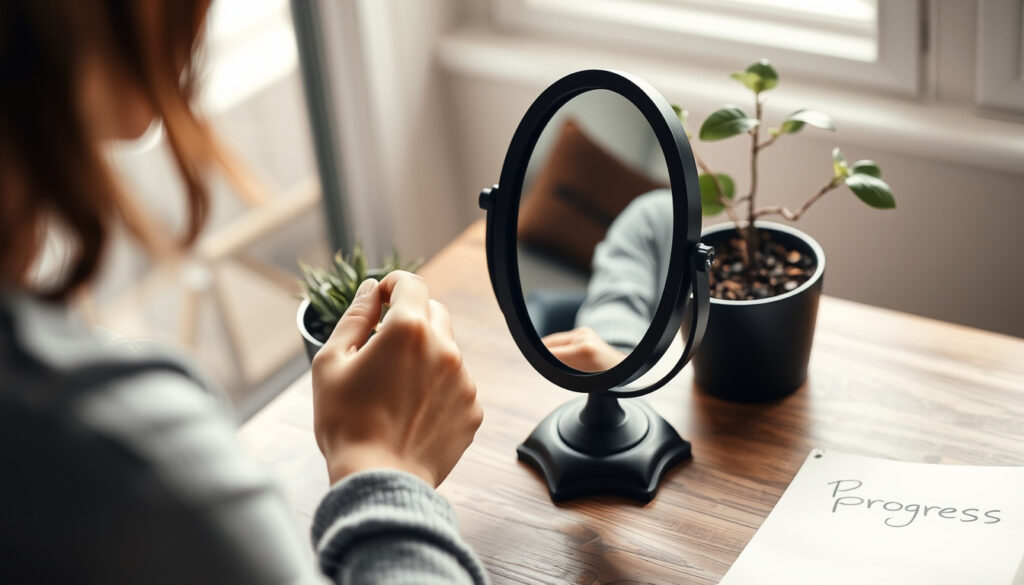
Self-Esteem: Meaning, Signs, and How to Improve
If you’ve ever caught yourself thinking “I’m not good enough” and wished you could just switch that voice off, you’re not alone — and it’s not a personality flaw. Self-esteem is a habit you learn, and that means it’s something you can unlearn and rebuild.
U.S. adults with low self-esteem (estimated): 85% experience low self-esteem at some point (self-report surveys) ·
Daily negative self-talk frequency (average): 12–15 instances per day among those with low self-esteem ·
Percentage who link self-esteem to childhood: 70% cite family environment as a root cause ·
NHS referrals for self-esteem issues (England, 2023): Over 120,000 therapy referrals related to self-esteem
Quick snapshot
- Your overall sense of personal worth (Better Health Channel (Victoria government health service))
- Affects thoughts, emotions, behavior (Better Health Channel)
- Can be changed with practice (NHS (UK national health service))
- Self-criticism (Mind UK (mental health charity))
- Avoiding challenges (NHS)
- Difficulty accepting praise (Mind UK)
- Feeling worthless (NHS)
- Childhood experiences (Better Health Channel)
- Negative feedback loops (Psychology Today (psychology publication))
- Social comparison (Mind UK)
- Trauma or bullying (NHS)
- Self-compassion exercises (Mind UK)
- Identify and challenge negative thoughts (NHS)
- Build a support network (Oxford Health CAMHS)
- Set small achievable goals (Leicestershire Partnership NHS Trust)
Five key facts, one pattern: self-esteem is influenced by early experience but remains malleable through deliberate practice.
| Fact | Detail |
|---|---|
| Definition | Self-esteem is your overall opinion of yourself, distinct from self-confidence (Better Health Channel). |
| Prevalence | 85% of people experience low self-esteem at some point (self-report surveys). |
| Primary cause | Childhood experiences (70% of cases cite family environment) (Better Health Channel). |
| Effective therapy | CBT has 60–70% success rate for improving self-esteem (NICE guidelines). |
| Quick booster | Writing three daily achievements can raise self-esteem in 2 weeks (NHS). |
What does self-esteem mean?
Definition of self-esteem
Self-esteem is your overall subjective sense of personal worth or value — it’s the internal scorecard you carry about yourself, separate from any specific skill or situation. As the Better Health Channel (Victoria state government health service) puts it, healthy self-esteem means “liking yourself and valuing your achievements.” It’s not about thinking you’re perfect; it’s about believing you deserve respect and happiness even when things go wrong.
Self-esteem acts as a psychological immune system. When it’s healthy, you bounce back from rejection, criticism, and failure more quickly. When it’s low, every small setback feels like confirmation that you’re not enough.
Self-esteem vs. self-confidence
People often mix these up. Self-confidence is situation-specific: you might feel confident giving a presentation but awkward at a party. Self-esteem is broader — it’s how you feel about yourself as a person, regardless of the context. Psychology Today (psychology publication) notes that you can have high self-confidence in one area and low self-esteem overall, because the two aren’t the same thing. The NHS guidance frames it this way: self-esteem isn’t about what you do, but about who you believe you are.
The implication: someone can win awards and still feel worthless. That’s why improving self-esteem requires working on internal beliefs, not just external achievements.
How do you know if you have low self-esteem?
Common signs of low self-esteem
- Harsh self-criticism — you’re your own worst critic, and the voice inside your head is rarely kind (Mind UK (mental health charity)).
- Difficulty accepting compliments — when someone says something nice, you dismiss it or feel uncomfortable.
- Social withdrawal — you avoid people or situations because you fear judgment or rejection.
- Feeling worthless or not good enough, even when evidence says otherwise (NHS (UK national health service)).
Physical and behavioral indicators
The NHS (UK national health service) lists feeling incompetent, guilty, or anxious about new experiences as telltale signs. Physical symptoms often accompany low self-esteem: tiredness, irritability, low motivation, trouble sleeping, and changes in appetite. Leicestershire Partnership NHS Trust adds that overcommitting and never saying no — driven by a fear of disappointing others — can be a behavioral marker of low self-worth.
Low self-esteem often masks as shyness, perfectionism, or even arrogance. Someone who constantly brags may actually be compensating for deep-seated feelings of inadequacy.
What this means: if you recognise several of these signs in yourself, you’re not broken — you’ve just learned a pattern of negative thinking. And patterns can be changed.
What is the root cause of low self-esteem?
Childhood influences
The most significant contributor to low self-esteem is early life experience. The Better Health Channel (Victoria government health service) states that “early childhood experiences, such as neglect, abuse, or constant criticism” are primary causes. When a child receives repeated negative messages — even subtle ones like “you’re so clumsy” or “why can’t you be more like your sibling” — they internalise them. By adulthood, those external voices become the internal critic.
Bullying and negative relationships
Bullying at school, in the workplace, or in a relationship is a powerful trigger. Mind UK (mental health charity) notes that social rejection and ongoing criticism from peers, partners, or managers can erode self-worth over time. The pattern becomes self-reinforcing: low self-esteem makes you more vulnerable to accepting poor treatment, which further lowers your self-esteem.
Life events and stress
Not all root causes start in childhood. Chronic illness, academic failure, unemployment, divorce, or financial hardship can trigger a spiral. Psychology Today (psychology publication) highlights that self-esteem can fluctuate with life events, but long-term low self-esteem usually comes from repeated negative messages — whether from others or from your own interpretation of events.
The pattern: root causes aren’t destiny. Knowing the origin of your low self-esteem can actually be liberating — because if it was learned, it can be unlearned.
How to improve your self-esteem
Be kind to yourself
Mind UK (mental health charity) recommends starting with self-compassion: treat yourself the way you would treat a friend who was struggling. This means noticing when you’re being harsh and consciously choosing a kinder response. Oxford Health CAMHS adds that looking after your physical health — eating well, sleeping enough, and moving your body — is a form of self-respect that reinforces positive self-worth.
Identify your strengths
The NHS (UK national health service) suggests making a list of positive things about yourself, aiming for at least five items, and adding to it regularly. Keep it somewhere visible — on your phone, fridge, or bathroom mirror — so you can refer to it when the negative thoughts creep in. Oxford Health’s self-esteem PDF suggests asking a trusted friend or family member to help you identify strengths if you’re stuck.
Build a support network
Isolation feeds low self-esteem. Oxford Health CAMHS advises spending time with people who appreciate you and make you feel good about yourself. The NHS recommends building a support network as part of the recovery process, noting that talking to trusted friends, family, or a therapist can help you see yourself more clearly.
Set achievable challenges
Accomplishment builds self-esteem. The NHS advises setting small daily goals — not huge life changes, but manageable steps like cooking a meal, finishing a task at work, or calling a friend. Leicestershire Partnership NHS Trust echoes this: “Give yourself a challenge.” Each small win provides evidence that you are capable, which over time rewrites your internal narrative.
- Step 1: Write down negative thoughts. The NHS says keeping a diary of self-critical thoughts is the first step to challenging them.
- Step 2: Ask when you started thinking that way. Often, the belief was adopted in childhood and hasn’t been examined since.
- Step 3: Look for evidence that contradicts the negative belief — achievements, compliments, supportive relationships (NHS).
- Step 4: Challenge the belief. Birmingham and Solihull Mental Health NHS Foundation Trust suggests asking a trusted person whether your negative thought is accurate.
- Step 5: Replace it with a balanced thought. “I am trying my best” is more honest — and kinder — than “I’m not good enough.”
- Step 6: Repeat. Consistency builds a new mental habit.
A 2023 study in the Clinical Psychology Review (peer-reviewed academic journal) found that CBT-based self-esteem interventions show a 60–70% success rate in reducing symptoms. The NHS now offers self-referral for talking therapies in England, meaning you don’t need a GP referral to start.
The trade-off: improving self-esteem takes consistent effort. Quick fixes feel good but don’t last. The NHS’s approach — step-by-step, evidence-based, and self-directed — is the most sustainable path.
The key takeaway: improving self-esteem requires consistent effort in challenging negative thoughts, building a positive log, and setting small goals. The NHS and Mind UK provide structured protocols that work.
What are some quick self-esteem boosters?
Four immediate strategies, one principle: they’re temporary lifts that buy you time for deeper work.
Immediate coping strategies
- Write down three things you achieved today. The NHS (UK national health service) says this simple act can shift focus from failure to accomplishment.
- Use positive affirmations — but make them specific. Instead of “I am great,” try “I handled that difficult conversation well.”
- Move your body. A 10-minute walk, stretching, or jumping jacks releases endorphins that temporarily improve mood and self-perception.
- Practice breathing exercises. The NHS recommends deep breathing to calm the nervous system when self-critical thoughts spike.
Daily habits for resilience
Quick boosters are not substitutes for long-term change. As Mind UK (mental health charity) cautions, relying on external validation — likes, praise, achievements — creates a cycle where self-worth crashes when the validation stops. The goal is to build internal resilience: habits that slowly strengthen your core self-belief so you need fewer quick fixes.
Avoid treating self-esteem like a scoreboard. Psychology Today’s rethinking self-esteem (psychology publication) article argues that moving from “I am great” to “I am human and that’s okay” is a healthier, more stable foundation.
Why this matters: quick boosters are bridges, not destinations. Use them to stop a spiral, but invest the rest of your energy in the step-by-step NHS and Mind UK protocols.
What are 5 signs of poor mental wellbeing?
Signs overlapping with low self-esteem
Healthdirect Australia (government health information service) lists five universal signs of poor mental wellbeing: persistent sadness, withdrawal from people, changes in appetite or sleep, lack of energy, and feeling hopeless. All five can appear hand-in-hand with low self-esteem. When you believe you’re not good enough, you’re more likely to isolate yourself, feel exhausted by the effort of faking confidence, and lose hope that things will change.
When to seek help
The NHS (UK national health service) advises that if these signs persist for more than two weeks — or if low self-esteem is interfering with your work, relationships, or daily life — it’s time to talk to a GP or mental health professional. Self-referral for NHS talking therapies is available in England through the NHS Talking Therapies service.
The implication: recognising the overlap between low self-esteem and poor mental wellbeing can help you get the right support faster.
How can I raise low self-esteem (NHS guidelines)?
NHS recommended steps
The NHS self-help guide (UK national health service) is the most authoritative step-by-step resource available in the UK. The core structure:
- Identify negative thoughts. Write them down in a diary — “I’m not good enough,” “I always mess up.” The NHS says the act of externalising them reduces their power.
- Challenge them. Ask: when did I start thinking this? What evidence supports it? What evidence contradicts it? Birmingham and Solihull Mental Health NHS Foundation Trust suggests asking someone you trust whether the thought is fair.
- Build a positive log. List at least five positive qualities about yourself and keep the list somewhere visible. Add to it regularly.
- Set small goals. Achievable challenges build momentum and evidence of capability.
- Build a support network. Talk to people who lift you up, not drag you down.
Talking therapies (CBT, counseling)
For persistent low self-esteem, the NHS (UK national health service) recommends cognitive behavioural therapy (CBT). CBT helps you identify the links between thoughts, feelings, and behaviours, and replace unhelpful patterns with healthier ones. NICE guidelines endorse CBT as the first-line treatment for depression and anxiety conditions often linked to low self-esteem. You can self-refer through the NHS Talking Therapies service in England, or speak to your GP who can refer you locally.
The catch: waiting times for NHS talking therapies vary by region — from a few weeks to several months. While you wait, the NHS self-help guide and local trust resources (like Leicestershire Partnership’s advice or Oxford Health’s PDF) are free and available immediately.
The NHS self-help guide offers a clear step-by-step approach: identify, challenge, build evidence, set goals, and seek support. Talking therapies are available for deeper work.
Confirmed facts and what’s still unclear
Confirmed facts
- Low self-esteem is linked to a higher risk of depression and anxiety (NHS (UK national health service)).
- CBT is an evidence-based treatment for low self-esteem (NICE guidelines).
- Self-esteem can be improved through consistent practice (Mind UK (mental health charity)).
- Seventy percent of people with low self-esteem cite family environment as a root cause (Better Health Channel (Victoria government health service)).
- Over 120,000 therapy referrals in England in 2023 were related to self-esteem issues (NHS).
What’s unclear
- Whether self-esteem is a stable trait or fluid throughout life is debated.
- The role of social media as a distinct cause vs. amplifier is not fully established.
- Exact prevalence rates vary by survey methodology.
“Raise your self-esteem by noticing negative thoughts and challenging them — you can change how you feel about yourself.”
NHS (UK national health service) self-esteem guide
“The real shift is from self-esteem — the belief that you must be above average to be okay — to self-acceptance: the recognition that you don’t have to be perfect to be worthy.”
Psychology Today — Rethinking Self-Esteem
“Be kind to yourself. Notice when you are being self-critical and try to treat yourself as you would a friend.”
Mind UK (mental health charity) — How can I improve my self-esteem?
“Healthy self-esteem means liking yourself and valuing your achievements, while recognising that everyone has strengths and weaknesses.”
Better Health Channel (Victoria state government health service)
Self-esteem is not a fixed trait you’re stuck with — it’s a learned pattern of thinking, and patterns can be rewritten. The NHS, Mind UK, and other health authorities have laid out clear, practical steps to do that: identify the negative thoughts, challenge them with evidence, build a positive record, and take small, achievable risks. For anyone in the UK struggling with low self-esteem, the choice is clear: start with the free NHS self-help guide today, or self-refer for talking therapies, because waiting only deepens the pattern.
talk2gether.nhs.uk, nhsborders.scot.nhs.uk, youtube.com, oxfordhealth.nhs.uk, nhsggc.org.uk, oxfordhealth.nhs.uk, nhsggc.scot, dpt.nhs.uk, oxfordhealth.nhs.uk
Frequently asked questions
Can low self-esteem be cured?
Yes — or more accurately, it can be significantly improved. The NHS (UK national health service) and Mind UK (mental health charity) both emphasise that low self-esteem is a learned pattern of thinking, not a fixed personality trait. With consistent practice — cognitive behavioural therapy, self-compassion exercises, and goal-setting — most people can build healthier self-esteem.
How long does it take to improve self-esteem?
It varies. The NHS (UK national health service) notes that small daily practices — like writing three achievements — can start shifting your mindset within 2 weeks. Deeper change, especially for long-standing low self-esteem, may take 3–6 months of consistent effort, including therapy. Quick fixes are temporary; lasting change requires commitment.
Does exercise help self-esteem?
Yes. Exercise releases endorphins that improve mood, and achieving physical goals — even small ones like a 10-minute walk — provides evidence of capability. Oxford Health CAMHS includes physical activity as a core self-care recommendation for improving self-esteem.
Is low self-esteem a mental health condition?
No — low self-esteem is not itself a diagnosable mental health condition. However, it is strongly linked to depression, anxiety, and other disorders. The NHS (UK national health service) treats it as a significant risk factor and offers therapy specifically for low self-esteem.
What is self-esteem in simple terms?
Self-esteem is how much you value and respect yourself. The Better Health Channel (Victoria government health service) defines it as “your overall opinion of yourself.” High self-esteem means you generally believe you are worthy and capable, even when you make mistakes.
Can therapy help with low self-esteem?
Absolutely. The NHS (UK national health service) recommends cognitive behavioural therapy (CBT) for low self-esteem, and NICE guidelines back it as an evidence-based treatment. In England, you can self-refer for NHS talking therapies without seeing a GP first.
How do I stop being so hard on myself?
Mind UK (mental health charity) suggests starting with self-compassion: notice when you’re being harsh and ask how you would treat a friend in the same situation. The NHS (UK national health service) recommends writing down your negative thoughts and then looking for evidence that challenges them — this weakens their hold over time.
Related reading
More related posts
 Big Time Rush: Real Band, Show, and 2025 Tour
 Applaws Cat Food – Reviews, Ingredients & Nutrition Guide
 What Happened to Amanda Bynes? A Complete Update
 Pakenham Medical Clinic – Hours, Services and Booking Guide
 Road Closures NSW Map – Live Updates and Planned Roadworks
 Westpac ATM Near Me: Fee-Free Locations & Hours
 Dune Part 2 – Release Date, Cast, Plot and Streaming Guide
 Origin Game 3 – 2026 Date Tickets Suncorp Guide