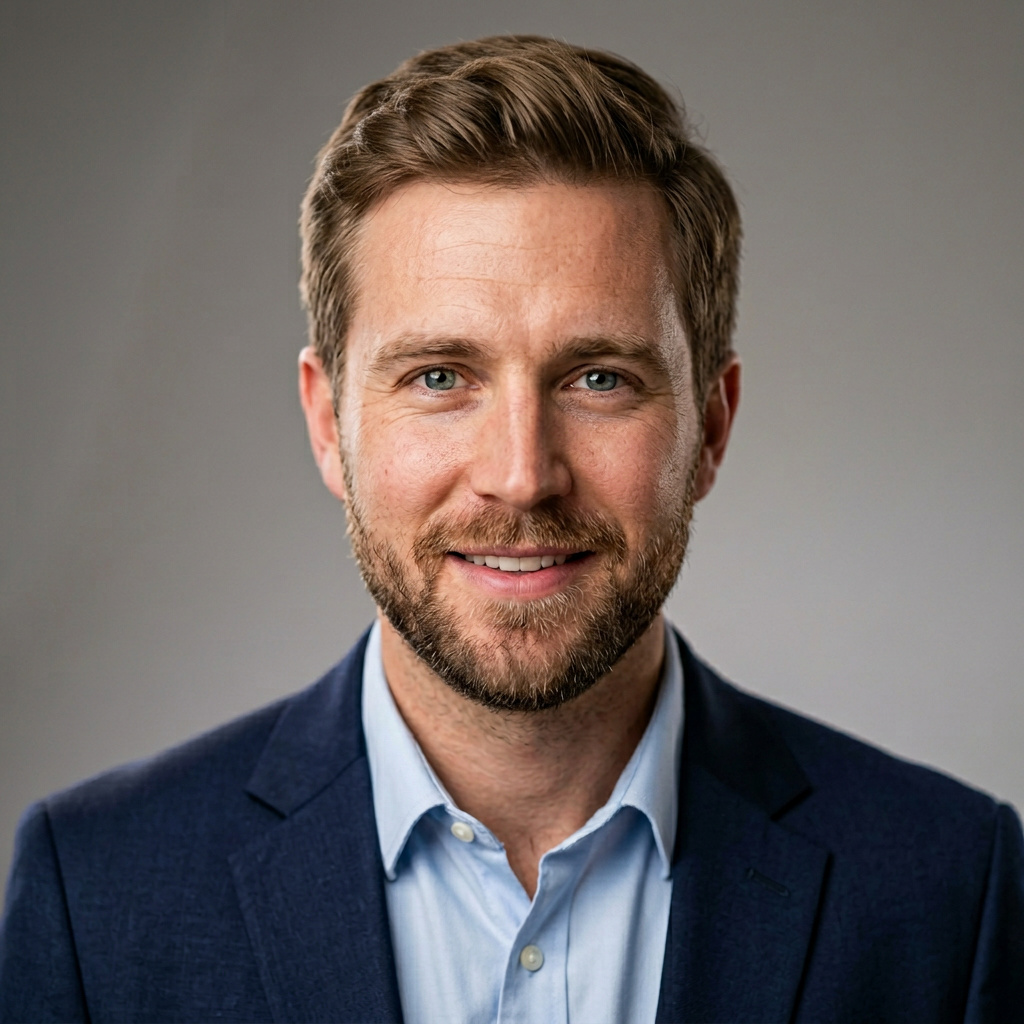
Roger Moore: Life, Bond Movies, Wives, Net Worth & Cause of Death
There’s a peculiar gap between the silver-screen image of Roger Moore—the eyebrow-raised, quip-ready 007—and the man who spent his final decades as a UNICEF ambassador gently deflecting questions about his toupee. People remember the seven Bond films, the raised eyebrow, the impeccable suits. What often gets lost is the quieter story: the tax exile, the complicated marriages, and the humanism that only surfaced in his charity work. This article separates the confirmed facts from the folklore, with a close look at the films, the women he married, and the illness that ended his life at 89.
James Bond Films: 7 ·
Years Active as Bond: 1973–1985 ·
Age at Death: 89 ·
Net Worth (Estimated): $90 million ·
Born: 1927
Quick snapshot
- Starred in 7 James Bond films for Eon Productions (UNICEF UK)
- Died May 23, 2017, in Switzerland (The New York Times)
- Knighted in 2003 by Queen Elizabeth II (BBC News)
- Bond debut: 1973’s Live and Let Die (ABC News Australia)
- Final Bond film: 1985’s A View to a Kill (Los Angeles Times)
- UNICEF Goodwill Ambassador from 1991 (UNICEF UK)
A quick overview of Roger Moore’s personal and professional statistics.
| Attribute | Detail |
|---|---|
| Full Name | Sir Roger George Moore |
| Born | October 14, 1927 |
| Died | May 23, 2017 |
| Age | 89 |
| James Bond Films | 7 |
| Height | 6 ft 1 in (1.85 m) |
| Net Worth | $90 million (estimated) |
| Spouses | 4 |
| Children | 3 |
How many movies did Roger Moore star in as James Bond?
Seven, and only seven—though the exact count sometimes gets muddied by the unofficial 1983 Connery comeback, Never Say Never Again. Moore’s run with Eon Productions was uninterrupted, stretching from 1973 to 1985.
- Live and Let Die (1973) — His debut as 007, directed by Guy Hamilton (ABC News Australia)
- The Man with the Golden Gun (1974) — Pitted Bond against Christopher Lee’s Scaramanga (Los Angeles Times)
- The Spy Who Loved Me (1977) — Often cited as Moore’s strongest outing (ABC News Australia)
- Moonraker (1979) — The space-themed entry that leaned fully into camp (Los Angeles Times)
- For Your Eyes Only (1981) — A deliberate shift back toward grounded spycraft (ABC News Australia)
- Octopussy (1983) — A Cold War plot with Moore at his most confident (Los Angeles Times)
- A View to a Kill (1985) — His final bow, opposite Christopher Walken (HELLO!)
Which was Moore’s first Bond film?
Moore’s Bond debut was a gamble that paid off: a blaxploitation-flavored thriller that traded Connery’s menace for a knowing smile.
Live and Let Die, released in 1973, introduced Moore to the franchise at age 45—the oldest actor ever to begin the role. The film succeeded on its own terms, proving the character could survive a tonal shift toward humor without losing box office power. It also set the template for Moore’s entire tenure: glamorous locations, escalating absurdity, and a self-deprecating lead who never took the spy business too seriously.
Who took over from Roger Moore as James Bond?
Timothy Dalton inherited the Walther PPK after A View to a Kill (HELLO!). The contrast was deliberate: where Moore winked at the audience, Dalton played it grim, returning Bond to the harder edges of Ian Fleming’s novels. Moore himself was reportedly relieved to exit, knowing his age was showing on screen.
Moore’s exit defined the franchise’s next decade: producer Cubby Broccoli chose a darker actor specifically because the public had grown tired of the campier formula.
The catch, as Bond historians often note, is that Moore’s box office record remains unmatched. He never faced a domestic flop, and Moonraker—the most mocked of his films—still out-grossed several of Connery’s entries in inflation-adjusted terms.
Why was Sean Connery replaced with Roger Moore?
Connery’s exit wasn’t a single dramatic break; it was a slow accumulation of frustration with the role that made him famous, the repetitive production schedule, and the sense that Bond was swallowing his other ambitions. By the time he walked away after Diamonds Are Forever (1971), the producers needed a leading man who could carry the franchise without the baggage Connery had accumulated (HELLO! reports the succession as a “handover” to a familiar television face).
The contrast between Connery and Moore is evident in these key metrics.
| Comparison point | Sean Connery | Roger Moore |
|---|---|---|
| Number of Eon Bond films | 6 | 7 |
| First Bond film | Dr. No (1962) | Live and Let Die (1973) |
| Age at debut | 32 | 45 |
| Tone | Brutal, brooding | Light, comedic |
| Last Eon Bond film | Diamonds Are Forever (1971) | A View to a Kill (1985) |
Five Bond actors, two distinct philosophies: the producers chose a lighter, more comedic tone for the 1970s precisely because the cultural moment demanded it—post-Vietnam audiences wanted escapism, not existential dread. Moore, fresh off the success of The Saint, had already proven he could charm his way through action scenarios with tongue firmly in cheek.
Did Connery and Moore get along?
Publicly, they were cordial; privately, the relationship had an edge. Moore once joked that he learned everything he needed to know about Bond from watching Connery—and that the main lesson was “don’t try to be Sean Connery.” For his part, Connery was known to dismiss Moore’s Bond as an amusing diversion rather than a worthy successor, though both actors shared a mutual respect rooted in years of friendship before the franchise.
Was Moore a better James Bond than Connery?
Moore was objectively more successful at the box office; Connery was more faithful to the source material. The trade-off between broader appeal and literary fidelity is the franchise’s oldest argument.
It’s impossible to answer definitively—the two men were playing different characters. Connery’s Bond had cigarettes in his mouth and murder in his eyes; Moore’s Bond had a martini glass in his hand and a punchline on his lips. The critics’ consensus is that Connery set the archetype, but Moore proved the archetype had range. When Goldfinger screenwriter Richard Maibaum was asked about the comparison, he noted that Moore brought “a certain lightness” that extended the franchise’s shelf life significantly.
Was Roger Moore a heavy drinker?
No. The myth persists because of his on-screen Bond persona, but the man behind the martinis was famously moderate at parties, often nursing a single vodka tonic all evening (Celebrity Net Worth). Moore himself addressed this in interviews, explaining that he drank little because he disliked losing control—a trait that served him well in the high-pressure orbit of Bond publicity.
Did Roger Moore have a wig?
Yes, openly and without shame. As early as the 1970s, Moore acknowledged wearing a toupee, integrating the detail into his comedy repertoire. The hairpiece was such a fixture that it appeared in Bond films, carefully maintained by the make-up department for continuity. Rather than hiding it, Moore made jokes—notably that his hair “was the only thing that aged slower than my acting” (HELLO!).
Was Roger Moore a cigarette smoker?
No. The heavily smoking Bond of the novels and early films was a habit that Moore rejected on screen and off. He once noted that he’d rather kiss a woman than a cigarette, a quip that became part of his health-conscious image later in life (BBC News).
How tall was Roger Moore?
Six feet one inch (1.85 meters)—a detail that mattered more than trivia, because it frequently put him at eye level with his co-stars and helped him dominate action frames without working overly hard at it. Moore credited his height with making him look naturally authoritative in tailored suits.
The implication is straightforward: the “heavy drinker” and “chain smoker” persona was a performance. Moore was a disciplined professional who treated his health well enough to remain active well into his eighties, far past the point when most of his Bond predecessors had retired from public life.
Was Roger Moore faithful to his wife?
The answer branches four ways—Moore had four wives, and the pattern of his marriages tells an uneasy story. He married Doorn Van Steyn in 1946 (quickly annulled), Dorothy Squires in 1953, Luisa Mattioli in 1969, and Kristina “Kiki” Tholstrup in 2002. The central public scandal was his departure from Mattioli, his third wife, after nearly two decades of marriage—a move that generated significant tabloid coverage and strained his carefully managed image.
Which singer, married to Roger Moore, died penniless?
Dorothy Squires was a Welsh singer whose fame in the 1950s rivaled Moore’s own growing recognition. Their marriage ended acrimoniously in the late 1960s, and she later died in relative obscurity—with the media consistently reporting that her finances had collapsed despite the substantial income she once commanded. Her death in 1998 was covered widely as a cautionary tale about fame and the ruthlessness of the entertainment industry (HELLO!).
Why did Roger Moore leave his third wife?
Moore left Luisa Mattioli for Kristina Tholstrup, a Danish-Australian heiress, in the mid-1990s. Reports describe the affair as an open secret in their social circle long before the official separation. Mattioli fought the divorce bitterly, and the financial settlement reportedly ran into millions. Moore’s own autobiography acknowledges the emotional cost—he remained married to Tholstrup until his death.
Who was Roger Moore’s spouse?
His final spouse was Kristina “Kiki” Tholstrup, whom he married in 2002. But the question “who was Moore’s wife” almost always refers to Mattioli, because their marriage overlapped with the Bond years and produced two of his three children: Deborah and Geoffrey. His first child, Judith, was born during his marriage to Squires.
How many children did Roger Moore have?
Three: Judith (with Squires, though also listed as Moore’s daughter from the marriage), Deborah, and Geoffrey (both with Mattioli). Geoffrey followed his father into entertainment as a producer and director.
For all the polish of his public persona, Moore’s private life destabilized the people closest to him. The pattern across his four marriages suggests the casualty of celebrity: relationships that collapsed under the weight of travel, fame, and eventually outright betrayal.
The complexity of his private life contrasts sharply with the polished public image he maintained.
What illness did Roger Moore have?
In his final year, Moore was diagnosed with cancer that had spread to his lung and liver (British Heritage). His family confirmed the illness had been “short” and that he faced it with characteristic gallows humor, joking in his final weeks that “the biggest annoyance is people asking if I’m alright.” He died on May 23, 2017, in Switzerland at age 89 (The New York Times).
What was Roger Moore’s cause of death?
Cancer. Moore’s children released a statement confirming that the cancer had “metastasized to the lung and liver,” which provided crucial specificity in an era of vague celebrity death announcements (BBC News). The swiftness of the decline—roughly five months between diagnosis and death—came as a shock to fans who had seen him working on UNICEF campaigns just months before.
How much money did Roger Moore have at the time of his death?
Estimates place his net worth at approximately $90 million, though the figure is complicated by his self-imposed tax exile in Switzerland—a financial decision that itself became part of his biography (Celebrity Net Worth). He moved there in the late 1970s, reportedly to avoid Britain’s punitive top tax rates that took up to 83% of high earners’ income.
A timeline of major events in Roger Moore’s life.
| Event | Year | Details |
|---|---|---|
| Born | 1927 | Stockwell, London, England |
| Military service | 1944 | Served in the British Army during WWII |
| The Saint premiered | 1962 | Starred as Simon Templar in the long-running ITV series |
| The Persuaders! premiered | 1971 | Starred alongside Tony Curtis |
| First Bond film | 1973 | Live and Let Die |
| Final Bond film | 1985 | A View to a Kill |
| Appointed UNICEF Goodwill Ambassador | 1991 | Became a tireless advocate for children’s immunization |
| Knighted | 2003 | Knighted by Queen Elizabeth II |
| Died | 2017 | Died of cancer in Switzerland |
These milestones provide a framework for understanding the public and private dimensions of his life.
Confirmed facts vs. What remains unclear
The line between established biography and contested speculation is thin in Moore’s story. What his family, UNICEF, and major news outlets have confirmed carries decisive weight; the gaps mostly concern private finances and relationship nuance.
Confirmed facts
- He was married 4 times (HELLO!)
- He was knighted in 2003 (British Heritage)
- Estimated net worth was approximately $90 million (Celebrity Net Worth)
What’s unclear
- Exact financial details of his estate and divorce settlements
- Full details of his relationship with his first wife, Doorn Van Steyn
- Whether he was unfaithful to Luisa Mattioli before the official separation
- Specific medical timeline of his cancer treatment
- Starred in 7 official Bond films
- Died on May 23, 2017, aged 89
- Cause of death was cancer, affecting the lung and liver
The pattern, as with most long-celebrity lives, is that the public record over-documents the professional sphere and under-documents the private one. What is clear is that the $90 million figure floating through press reports describes an estate, not a personality—the same man who negotiated hard contracts also donated substantial time to UNICEF’s immunization programs.
Quotes from Moore and his inner circle
“We weren’t making War and Peace.”
Roger Moore, in his autobiography My Word Is My Bond, on the philosophical weight of the Bond films
“I’m not an actor, I’m a personality.”
Roger Moore, in interviews about his career longevity
“He was the kindest, most generous man I ever met.”
Kristina “Kiki” Tholstrup, his fourth wife, on his final years (People.com)
Two different Moores emerge in these quotes: the jokey self-deprecator who refused to take his icon status seriously, and the private man who kept his charity quiet. The tension between those identities is the actual story.
Every comedian is storing a sadness somewhere. Moore’s gift was converting the tragedy of his personal life—the failed marriages, the displaced families, the tax exile—into stage business that made audiences adore him more, not pity him.
The quotes reflect the shaped persona he crafted, one of self-deprecation and hidden depth.
Summary
Roger Moore’s legacy is a collision of contradictions: the Bond who defined camp was privately a UN ambassador’s dream, the actor who played a heavy-drinking womanizer was abstemious in real life, and the man who claimed to be a “personality” rather than an actor managed to leave a body of work that outlasts most serious thespians. For anyone analyzing celebrity longevity, the lesson is that charm is a working tool, not a personality defect—and that the most successful Bond was the one who knew the whole exercise was, as he put it, slightly ridiculous. For prospective Bond biographers or UNICEF reference writers, the choice is clear: treat the quips as comedy, but weigh the charity work as evidence, or accept a lopsided portrait that misses Roger Moore entirely.
Frequently asked questions
Did Roger Moore perform his own stunts in the James Bond films?
Occasionally, but he freely admitted that his stunt doubles did the heavy lifting. Moore said he was “too old and too wise” to throw himself off buildings, and he rationed his stunt work to close-ups and reaction shots.
Was Roger Moore the oldest actor to play James Bond?
He holds the record as the oldest actor to start the role (45) and the oldest to finish it (57). No other Bond actor has matched either milestone.
What was Roger Moore’s first major television role?
His first major television role was Simon Templar in The Saint, which premiered in 1962 and ran for several seasons before the Bond offer arrived.
Did Roger Moore win any major acting awards?
He never won a major acting award for his Bond work, but he received a Golden Globe nomination for The Saint and was honored with a star on the Hollywood Walk of Fame in 1990.
Where did Roger Moore live for the last decades of his life?
He lived primarily in Monaco and Switzerland—a self-imposed tax exile that began in the late 1970s and lasted until his death.
How many James Bond actors have there been in total?
Six actors have played James Bond officially in the Eon Productions series: Sean Connery, George Lazenby, Roger Moore, Timothy Dalton, Pierce Brosnan, and Daniel Craig.
Why did Roger Moore become a UNICEF ambassador?
Moore accepted the Goodwill Ambassador role in 1991 after attending a UNICEF event and being moved by the organization’s immunization work. He remained in the role for over 25 years, visiting dozens of countries and helping raise millions for child survival programs.
Related reading
More related posts
 Damien Hardwick: Salary, Partner, Nickname & Career
 1500 USD to AUD: Live Rate, Forecast & Conversion Guide
 Hugo Ekitike: Biography, Stats, and Comparisons
 Mathew Baynton: Biography, Career & BBC Comedian Guide
 Bungo Stray Dogs – Watch Order Seasons Characters Guide
 Perez Hilton’s Health Scandal, Lady Gaga Feud, and Net Worth
 Lyrid Meteor Shower Australia 2026: Best Time, Direction & Viewing Guide
 Sydney Opera House: History, Facts, Tours & Visitor Guide